I woke early and spent a little while praying and journalling before ambling to the kitchen to spend a few moments with my daughter before she left for school. She packed a salad for her lunch; I tidied the kitchen and emptied the dishwasher. And we talked—about her day, about my day, about anything and everything that came to mind. I treasured these times of easy conversation with my adult children, even more so now we only had one left at home. When I returned to the bedroom, my heart was full.
So was my mind.
After our random ramblings, it was difficult to bring my thoughts back to that place where God was my sole focus. Yet, as I remained quiet His loving words began to flow, offering gentle counsel and welcome comfort—words too rich to keep to myself.
This is His heart for us all, dear reader. So please take a few minutes to read and let them soak into your soul.
‘Be still, My precious one. Be still. Still in body. Still in heart. Still in mind. Let your breathing slow. Let your thoughts slow.
Know that I am God—reigning over all things and all people. Able to work good, even in the most unlikely situations, through the most unlikely people. Find your strength, your peace in the assurance of My constant presence. And let your heart be at rest.
I am the I AM.
The one who has always been and always will be. Your Creator and Sustainer. The one who keeps air whooshing in and out of your lungs and blood flowing through your body, carrying life-giving supplies to every cell, every system. The one who tells the sun when to rise and the clouds when to water the earth. Who dictates the turning of the seasons—even the seasons in your life.
Trust Me.
I see you. I delight in everything about you, for you are my creation, my treasured possession. Yes, I see your worries and those concerns that make your shoulders sag and your head hang down. I see those areas of weakness and struggle and failure.
Lift your eyes again to my face. I love you . . . even now. I see the whole span of your life and there is much yet to come. Do not get bogged down in the challenges of the now, thinking this is all there is.
Look to me.
Feel my pure love and surrender to it. Let go of fear and control. Be that soft, pliable clay in my hands. And I will continue to transform you, bringing freedom from old ways and leading you in my way of life. Don’t worry about what your life will look like in the days to come. At each step along the path I will be there, providing all you need for that moment.
Fix your eyes on me and everything else will shift into its right perspective. Even your physical body will settle. This is the place of true rest—abiding in me, remaining in close connection, relying on me as your Source and your Guide. Drink My living water and all will be well with you. I alone am the Satisfier of your soul.’
*If you want to read more of God’s ‘Heavenly Whispers’ to me, you can find me on social media at @susanbrownauthor21 on Instagram and Susan Brown Author on Facebook.
If you’d like to use these whispers as a Christian meditation, I’ve posted a live video on my Facebook page. ❤️
‘I have calmed and quieted myself, I am like a weaned child with its mother; like a weaned child I am content.’
Psalm 131:2 (NIV)
‘Let us fix our eyes on Jesus, the author and perfecter of our faith’
Hebrews 12:2a (BSB)
‘Listen, listen to me, and eat what is good, and you will delight in the richest of fare.’
I lie across our already-made bed, golden sunshine pouring in the full-length windows, bathing me in its warmth. It’s nine o’clock on Sunday morning. Preparation for our lunch guests is done and we’ll soon be leaving for church. Yet my soul yearns for stillness. I let my eyes slide closed for a few seconds and breathe deep and slow, then flick through my journal to the first clear space and begin to write.
LORD, I rest in You. Thank You for Sabbath, for Your command to rest and Your ability to slow me down. I praise You!
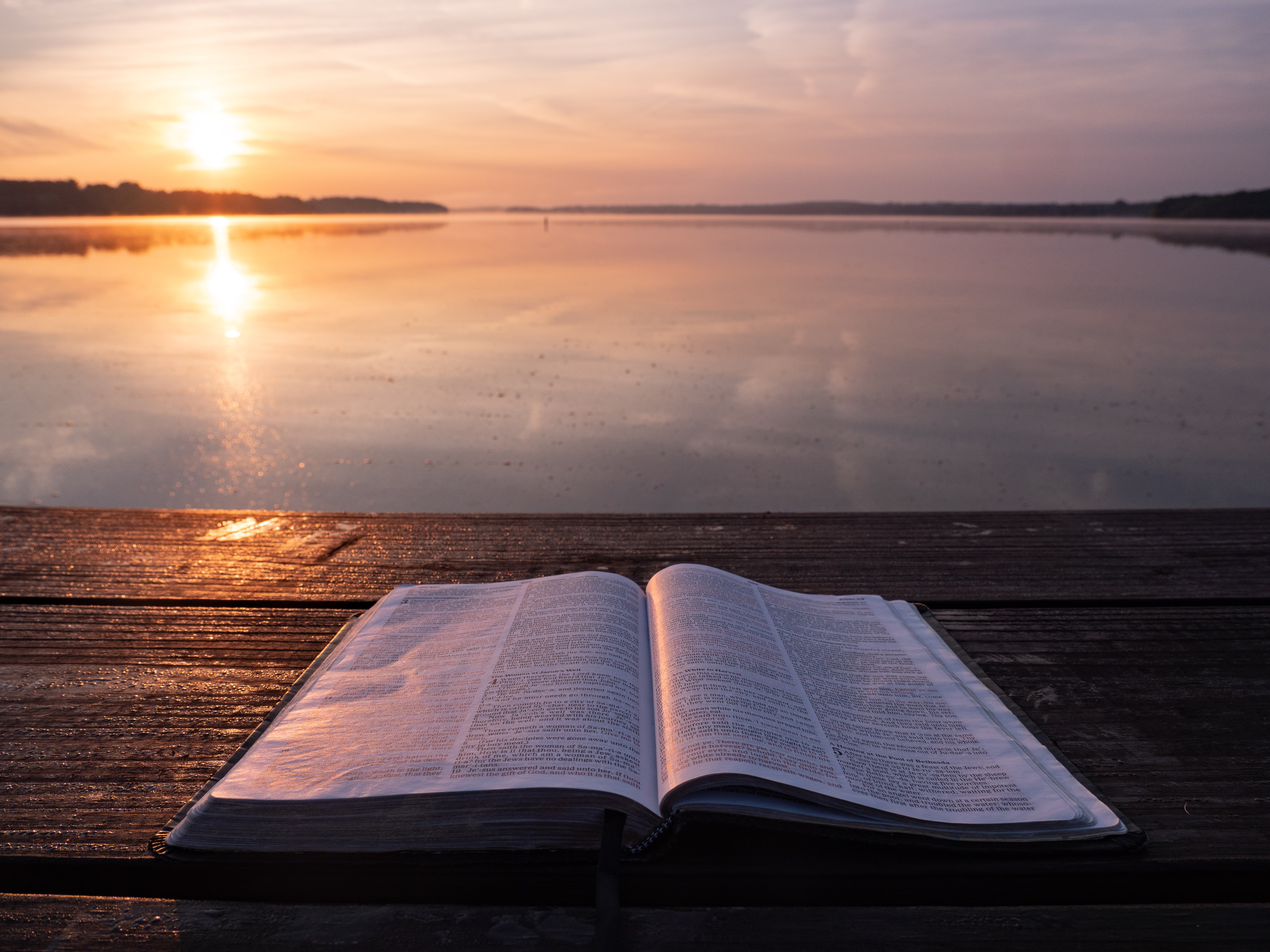
Reaching for my bible, I turn to Psalm 46 and go straight to the verse I know so well. ‘Be still and know that I am God.’ I pause, drinking in the words—be still—and feel my heart, my mind, my whole being winding down. And I marvel that my God commands me to pause and rest in Him. He knows how much I need it.
I shift my gaze back to the beginning of the chapter, eager to understand the context of this command.
‘God is our refuge and strength,
An ever-present help in trouble.’
Ah, trouble. That’s where it begins—when stillness seems the most impossible, yet is the most crucial. I read on, images leaping off the page to strike me with their power. The earth trembles and implodes. Mountains rumble and crash into a wild, foaming sea. I see it in my mind—towering symbols of strength breaking into pieces and plummeting into seething waves. And I hear it—the cataclysmic, deafening roar of disaster.
Then comes verse 4.
‘There is a river whose streams make glad the city of God,
the holy place where the Most High dwells.
God is within her, she will not fall;
God will help her at break of day.’
Photo from Pexels
And I am drawn into the eye of the storm—that quiet, anchored place of security in God. Through my faith in Jesus, God now dwells within me by His Spirit. So I will not fall. He will help me at break of day.
I get to verse 6 and I am tossed back into the chaos, this time on a continental scale. Nations in uproar, kingdoms falling. Again, the images are so vivid. Swords clashing, men cursing and raging, blood pouring from countless wounds and smoke rising from burning remains, obscuring the view of bodies crumpled on the ground and muffling their wails of desperation.
It’s loud and awful and beyond comprehension.
Then God lifts His voice. And everything is reduced to silence.
And all, including me, are brought back to this one truth:
‘The LORD Almighty is with us;
the God of Jacob is our fortress.’
The LORD Almighty. The LORD All Mighty. Wars may come, rulers may rise, but the LORD determines their end—all over the earth. And He takes every weapon of warfare in hand, rending them powerless.
He says, ‘Be still—everything and everyone. Cease! See and understand that I am God. There is no other. I reign over the nations. I reign over the earth. No matter what chaos may come, I will have the final say.’
‘And I am your fortress,’ He says to me. ‘Take refuge in Me and I will surround you with My strength.’
I glance at the clock then rise from the bed and go, hope burning in my chestand new confidence in my stride.
Sunday morning. I stretched my hand across wrinkled sheets on my husband’s empty side of the bed, opening one eye just enough to make out the time on his bedside clock. 5:50am. Ugh! Not exactly a slow start on my so-called day of rest. At least I wasn’t the first one awake in our house.
I flopped onto my back, air whooshing from my lungs. Another day—a different day. Yet my pulse throbbed in my ears the same way it had every other morning that week. Maybe my heart was trying to keep pace with my rushing stream of thoughts, like a frantic mother chasing her runaway toddler. I switched on the bedside lamp, its pale, yellow light filling my corner of the room, and covered my eyes. LORD, I’m so tired.
For a while I lingered there, wavering, longing to pull the covers over my head and sink back into a dreamless slumber. Yet my soul was parched and panting, desperate for fresh water. I pulled two extra pillows from the floor and sat upright, propping them behind me, then gathered my bible, journal and pens. Closing my eyes, I inhaled slowly, praying, Thank You, LORD. A new day. Eyes open, I turned to a fresh page in my journal and began to write.
‘Sunday 24th July, 2022.
6am.
LORD, I put my hope in You. You are my strength and my song.’ Those words were sincere—an expression of faith. But on that morning, none of them felt real. ‘Father, my heart is downcast,’ I wrote. ‘My body and emotions are weary.’ I paused and sighed, my shoulders drooping. ‘I look to You—my help and my strength—and lay before you all my struggles . . .’
Out through my pen and onto the page the words flowed, psalm-like—an inky, itemised confession of every battle and every negative emotion that weighed so heavily on my heart. Three months earlier, my husband and I had begun a season of intensive training—a fast-paced, schedule-cramming blend of paid work, online study, manuscript writing and course creation, all while preparing our family for a massive interstate move. As lovers of slow time and simplicity, we found the pace exhausting.
‘LORD, I’m not sure I can keep doing this.’
I pressed my lips together in a grim line as I stared at the words—so confronting, but true. My endurance and hope were waning—fast.
Busy seasons in our past had taught us that working non-stop was not sustainable. Yet here we were, doing everything we knew we shouldn’t—spending long hours, late hours glued to our computer screens, hijacking family mealtimes by ‘talking shop’, and prioritising productivity over time with friends. And under the surface simmered all the unanswered questions about our upcoming move, adding further to the weight of our load.
The cracks were starting to show. Special events I’d normally enjoy had become ‘disruptions’ to my task list. I felt an alarming disconnection from our children—and at times even my husband. Some nights I lay in the darkness, my whirring mind, ringing ears and aching head all screaming, ‘Stop!’ And the breathlessness I’d battled during our last major move was rearing its awful head again.
We had reached the halfway mark in our online course, so the pace would slow in three more months. I was looking forward to that. But right now, my view of the finish line was obscured by so many hurdles, those three months looked more like three years.
This was not how we wanted to live. We knew life was better with balance and breathing space. And yet . . . conviction rose in my spirit. ‘And yet I know You’ve called me to it.’ That one detail made all the difference. Yes, my body and soul were groaning, yearning for a return to easier days. But God was in this demanding season—we knew He was—which meant He must have a purpose in it and a way for us to walk through it. Didn’t He always?
Even while we loathed the busyness, our spirits were soaring in gratitude for all our Father was doing. These were exciting times—times of growth and equipping, ready to launch into new things. I nodded as I wrote, ‘God, I belong to You. My life is in Your hands. You are my God and I know You are good. Please fill me with Your Spirit and renew my strength in Your presence.’
I felt my heart begin to settle—as it always did when I surrendered. My gaze shifted to the previous page in my journal, where the day before I’d copied a contemporary translation of Psalm 23:6.
‘So why would I fear the future?
Only goodness and tender love pursue me all the days of my life.
Then afterward, when my life is through, I’ll return to your glorious presence to be forever with you!’
(The Passion Translation, Psalm 26:3)
David’s bold declarations fuelled my flickering flame. Why should I fear the future? God was with me on this journey, eager to do me good. With Him by my side, I always had a reason to be confident. Even now.
Below the verse I’d written some notes from further study, then recorded in red the words I sensed God speak.
‘So, I am pursuing you now with my goodness and kindness. Hunting you down, running after you, ensuring you have all you need for each day. Look, see and give thanks and you will see more and more.
Don’t focus on areas that seem to be depleting. Fix your gaze on My face and expect to be satisfied in and by Me each day. I will always supply what you need as you seek to walk in My purposes.’
‘Look, see and give thanks and you will see more.’ I reread those words, underlining them, then flicked back a couple more pages, hunting for more red writing. A few entries earlier, I found, ‘My gifts are there for you every day. THANKSGIVING opens your eyes to see them.’
‘Ingratitude is an eye disease every bit as much as a heart disease.’ (emphasis mine)
Did I have an eye disease, I wondered—a distorted view that magnified the negatives and was blind to God’s gifts in each day? If I did, something needed to change.
The following week, unprompted, a mentor gave me this counsel: ‘Thanksgiving is vital to keeping your heart in a place of rest and sensitivity to God in this busy season. As you choose to give thanks, He’ll show you how to live by His grace.’
There it was again—thanksgiving. I’d already started scribing a few short lines of gratitude each day. But God was calling me to more, urging me to stop and really see. So, when our church began a 30-day fast, I chose to skip breakfast and spend longer in prayer. This gave me more time to reflect and thank God for His blessings. And as I did, I noticed the weight I’d been carrying begin to lift.
Then came the morning I woke at 3am. For an hour, I lay still and quiet in the silence, wondering if I’d drift back to sleep. Finally, I saw my opportunity, climbed out of bed and shuffled to the lounge with my books.
‘Thursday 11th August, 2022
3:55am.
Lord, I am yours. Thank you for your faithful love and readiness to teach me your ways. Keep working in my heart and mind and body, leading me through in your grace, truth and rest.’ Joy bubbled inside me, despite the early hour. God was doing so many wonderful things. Now I had extra time to record them. I moved my pen to a new line.
‘I’m thankful for . . .’
I began listing all the ways our family had been blessed in recent days, pausing between each point until another memory came to mind: a sunny rental home for an adult child; protection from injury in a car accident for another; some promising job interviews for our uni graduate; the warmth and generosity of our local mechanic when a car broke down; my husband’s loving support and listening ear when I was feeling low, and more.
Once I’d covered that angle, my thanks continued to flow: my lovely, capable osteopath; some new opportunities for book sales; the daily challenges and opportunities of my work role; the wise words and loving prayers of my mentor, and my lifeline—the Bible.
The longer my list grew, the more I recognised God’s faithful care. By the time I finished, an hour had passed and I’d filled a whole page of my journal with reasons for gratitude. And my heart felt lighter—even a little bit hopeful. God was moving—protecting and providing, moulding us and directing our circumstances ready for the changes ahead.
Time didn’t always allow me to write such long lists. It was a few days before I wrote my next, shorter one. Several more slipped by before I wrote another. Over time, I developed a habit of writing a list most days. Sometimes I gave thanks for ‘basics’ like warmth, shelter, a comfortable bed, clean water and a kitchen full of food—luxuries we enjoy while so many people in the world don’t. On other days I wrote in awestruck detail of the way the practicalities of our move—large and small—were coming together. Worry and weariness began to fade, driven out by the light of hope, and I noticed a new spring in my step. God loved us. He was good. Just as He was faithful now, so we could expect Him to continue to lead us through.
A year has passed since that pivotal time and I’m still writing lists—sometimes in my journal and often aloud as I tell others of God’s generosity and kindness. On my birthday in June, my husband described me as a woman who, ‘notices and celebrates every little thing’. He couldn’t have given me a greater compliment! On this path of thankfulness, I’m learning to see the good in every situation. And to understand that David’s words in Psalm 23:6 are more than just lovely poetry. They are a living reality. Every day, God passionately pursues each of us, ready to show us His goodness.
The question is, are we stopping long enough to notice?
‘Surely your goodness and love will follow me all the days of my life . . . ‘
Psalm 23:6
‘Those who hope in the LORD will renew their strength. They will soar on wings like eagles; they will run and not grow weary, they will walk and not faint.’
‘Don’t take the bait.’ God’s inner whisper cut through the music and singing that was rising around me. Right away, I knew what He meant.
I was annoyed. Angry. In a huff. My husband had done some things that morning that upset me. Now a torrent of emotions was swirling inside me—festering, gnawing and setting my whole body aflame.
We were at church—my happy place, where I hugged my friends, soaked up life-giving truths and sang with all my heart.
Not today.
Today I had crawled inside my pain, closed the shutters and posted a ‘Don’t Come Near Me’ sign.
It wasn’t that my husband did anything particularly bad. He just did things differently to what I thought he should. And because of that, I concluded he didn’t value me. It was a crazy mental leap, considering his devotion—through thick and thin—over twenty-six years. But I was offended—and that offence had dragged me to a place of mental turmoil.
Offence is one of our enemy’s most cunning ways to lure us off-track. He often blindsides us, striking when and where we least expect it. In this world full of fallible people, we have many opportunities to be hurt. If we choose to hold on to the hurt and carry it around, our peace quickly evaporates, our view of people is distorted, our hearts turn sour and our words become fiery darts, doing damage wherever they land. Worst of all, offence puts a wall between us and God. ‘With the measure you use, it will be measured to you,’ Jesus said.
Photo by Meruyert Gonullu on Pexels
I know this. I’ve seen the damage offence has done in other people’s lives. I’ve told them how important it is to deal with offences quickly. Yet there I was, stewing, and the fact that I knew the danger and was still rehashing my husband’s ‘crimes’ only intensified the burn.
The music built to a climax and I realised the time of singing was almost over. Closing my eyes, I mouthed the lyrics, trying to silence the voice of pain, let go of my anger and forgive. Red hot, the lava inside me kept bubbling. I peeped sideways at my husband. His face was upturned as he sang—eyes closed, his body rocking in time.
How can he sing like nothing’s wrong? I seethed. He mustn’t even realise I’m upset. Doesn’t he care?
When the song ended, we sat down. Folding my arms, I pursed my lips and focused on the guy on the platform—our pastor. His expression was joyful and his speech animated but his words washed over me without registering. My mind was thick in fog.
After a while, some listeners started voicing their agreement. ‘Amen.’ ‘So good.’ A few people even broke into applause at one point.
He must be saying something important. I should listen. I shifted in my seat and squinted my eyes, trying again to concentrate. It was no use. I’d dug myself into a hole so deep I couldn’t even figure out which way was up. I exhaled sharply through my nose. God, please help me.
I knew we needed to talk. On my own, I wasn’t getting anywhere. But we couldn’t resolve this issue here—there was too much to say, too many eyes and ears all around us. I leaned forward and pressed my fingers against my forehead, starkly aware that the hand that usually reached over to rub my back was absent. God, please. I’m stuck.
The preacher finished speaking and bread and juice were handed out ready for communion. Through my mind ran the words of Paul, ‘Anyone who eats or drinks in an unworthy manner . . .’
That was me.
I wasn’t ready.
Before taking communion, we’re told to stop and examine ourselves, check our attitudes and see if there’s anything blocking our oneness with Jesus. The Son of God gave His everything for us, enduring accusation, rejection and the most brutal of deaths—purely because of love. How could I insult Him by coming to this sacred time full of anger and resentment?
People around us closed their eyes in prayer and I saw my opportunity. Leaning close to my husband I whispered, ‘Please forgive me for being harsh and angry.’ I still felt upset. But I knew I needed to humble myself and admit my fault. That pride and bitterness was too big a burden to carry.
His response was immediate. ‘I forgive you.’
I flinched. Is that all?Doesn’t he see his own fault in the situation?Doesn’t he want my forgiveness too? Like a spiked barb, offence started pricking me, trying to get a fresh grip on my heart.
Photo by Karolina Grabowska on Pexels
This time I breathed deep and refused to be snared. I’d already missed out on so much. It just wasn’t worth it. If I continued to hold on to offence, it would only cause more heartache.
Like a lion lying down to sleep, I felt my soul settle as the anger began draining away. I was still shaken and sad, shocked by my own intensity and wearied from the battle. But I could breathe. I knew we’d talk later and work through the issues.
It ended up taking a few conversations over the next week for my husband and I to fully understand each other’s perspectives and motives from that morning. Even after so many years together, we sometimes read each other wrong. This reminds us how much we need God’s help to walk with humility, honesty and compassion. God is the ultimate healer and restorer, able to build and strengthen our relationships when our emotions would tear them down.
How are you going in this area of offence? Have you taken the enemy’s bait?
‘Be alert and of sober mind. Your enemy the devil prowls around like a roaring lion looking for someone to devour. Resist him, standing firm in the faith . . .’ 1 Peter 5:8-9
Author and speaker, John Bevere, has written an excellent book on this topic, “The Bait of Satan”. Find it here.
The air was fragrant with the scent of peppermint oil and eucalyptus. I lay under a thick, warm towel, face down. Soft music soothed my frazzled nerves. The therapist’s hands moved along my neck and shoulders, kneading tension from my aching muscles.
Two weeks earlier, my husband and I had trudged through a bout of COVID. While our illness was mostly mild, the fatigue it brought lingered. Six days along, when we were still weak and vague, an email informed us we needed to move—in just five weeks’ time. Though we barely had energy or headspace to keep our household running, house-hunting and packing were added to our lengthy to-do list.
After one week of searching with little reward, I was so full of fear and anxiety, I thought my head would burst. If only someone could come and fix everything for me, like mum so often had when I was young. I noticed my mind running to desperate places, secretly wishing I could run away or go to sleep for a month—anything to escape the battle that lay ahead. The fear that gripped me wasn’t based so much on the chance we might not find a house, though that simmered under the surface. It was more that I didn’t think I had what it would take to survive the journey.
I’ve been through upheavals like this before. Bigger ones, even—like our move 1400 kilometres north from Tasmania three years ago. At that time I saw God lead us so clearly—at every stage I sensed His counsel, encouragement and comfort. This time my mind was so foggy I could barely focus to read my bible, let alone hear His whisper. Even when I did sense what God was saying, I couldn’t grasp hold of the hope He offered.
My body was still unwell. So were my emotions—deep in the slump that sometimes comes with illness. Paranoia, powerlessness, depression and middle of the night panic all had their moments of attack. The littlest trigger set my stomach churning and pain running through my body. I felt like a wreck—a shell of the woman I’d been—completely wrung out. I kept reading, kept praying and journaling, but couldn’t seem to shake off the fear.
On the morning of massage day, I realised I needed to push through and fight. There was no way I could carry on as I was. Mustering all the strength I had, I began speaking aloud God’s promises.
With each declaration, a tiny chink was cut in the fear that had imprisoned my mind. This was progress. But it took so much energy I couldn’t sustain it for long.
‘God,’ I whispered. ‘I can’t do this alone. Please speak. I’m listening.’
Later I lay on the massage table, soaking up every hope-filled lyric in the Christian music I heard. The therapist, a friend from church, started working on my arms, her touch gentle yet firm, her thumbs pressing soothingly on sore spots.
‘God loves you so much,’ she said, her voice gentle. ‘He has a good plan for you.’
‘Thank you,’ I whispered, her words settling in my heart. ‘I need that reminder.’
She went on massaging, silent for a minute before adding, ‘I believe He’s going to give you a new perspective.’
My heart sighed. Oh, yes, Lord. That’s what I need.
She massaged one of my hands then the other, rubbing in small circles along the muscles between my fingers, relieving tension I hadn’t realised was there. ‘He’s going to help you see your situation from His perspective.’
I felt my spirit lift. Let it be, Lord.
That evening a friend checked in to see how I was via messenger. She wrote, ‘It seems like God is stripping away all the control from you so He has total control—a great thing but a very painful thing.’
Photo by Ran Berkovich on Unsplash
I pondered her words after our conversation ended. She was right. After spending years seeking to rest in God’s goodness, I’d slipped into worrying, imagining all the possible scenarios of how things could play out—mostly what could go wrong. The reality was, no matter how much thought or worry I put in, I couldn’t control the outcome. Only God could give us favour with a home-owner among the sea of applicants. Only He could open up a way for us.
When I went to bed that night, I prayed, Lord, please give me a dream—something so vivid it brings lasting change to the way I think. Early the next morning I woke many times, not with a dream but with a sentence I’d once heard running through my head.
‘Do what you can do and let God do what only He can do.’
Do what I can do. What could I do? I could pray. I could ask others for input, look for suitable houses and get our application documents ready. That was all. Suddenly a burden lifted. All I had to do was fulfil my role.
The rest was up to God.
That day I started working on a rental application. It was detailed, tedious and took a very long time. When I lowered myself into bed that evening, I opened my current read to see the next chapter’s title. Perseverance.
Ha ha, God. Perfect timing. Okay, I’m listening.
The pages that followed told the story of a man who always quit when things got difficult. He went through a string of failed relationships and lived a restless, miserable life—until he learned to endure the tough patches.
The next morning as I opened my eyes, another revelation came.
‘This process will be uncomfortable,
but it won’t destroy me.
God will see me through.’
I was struck by a realization as I jotted the words in my journal. My thinking was faulty.
Discomfort would not destroy me, no matter how much it felt like it would.
I had subconsciously agreed with an inner voice that whined, ‘I can’t bear this’. Several times before, that phrase had tripped me up. But I’d never acknowledged its deceptive nature. Only God knew what I could bear, and He would set the limits on how far this journey stretched me. I didn’t need to run or hide or go to sleep for a month. I needed to face and accept this season of discomfort and walk with Him all the way through. He would bring me out the other side. I could endure—if I relied on Him one day at a time.
A few days later, after a long time studying Proverbs, I sat quietly with my journal and felt God speak these words to my heart.
‘Enjoy this process (of house-hunting), knowing there will be a good outcome. Choose to enter fully into what I am doing—even when it doesn’t make sense—and know I’ll work good in your heart (and mind) through it.
When you choose to offer your best to a process you’d rather not be in, I do My best work in you.’
God knew I didn’t want to be in this process. And He was asking me to give my best anyway. He saw the bigger picture and His focus was as much on what He was doing in me as what He was doing for me.
Isn’t that what Romans 8:28-29 tells us? It doesn’t say God works all things together to make our lives comfortable. It says He uses all things—even the really hard things—to mould us into the likeness of Jesus. God’s greatest desire is that we grow into the unique individuals He destined us to be, each walking in His plan—the truly good life. The outcome of the process (though He does provide for our needs, often in amazing ways) isn’t nearly as important as the work He does in us through it.
There’s only one week now till moving day and our house-hunt isn’t complete. It’s been difficult to stay in that place of quiet trust the last few days. What ifs have started creeping in, whispering fear to my soul. Working through the final edits of this post has been helpful. It’s put the truth before my eyes once more. Though this process feels torturous, God is doing something very good.
What battle are you facing right now? And how is God working in you through it? Though this patch you’re in may not seem to hold anything you can view as good, if you seek to walk with Him through it, there will be a time where you can.
PS. Two days after completing this, our rental application for a lovely home was approved. Though it’s too long a story to go into now, we know this is the home of God’s choice for us. And we are oh-so-thankful.
The lights were low, the room warm and full of people. I closed my eyes while music and voices swirled around me, my heart swelling with emotion. We were back—together at last—singing carols in anticipation of Christmas. We’d just begun one of my favourites. This year, after many months of restrictions and isolation, its words seemed especially poignant.
‘Long lay the world in sin and error pining . . .’
Photo by Valentin Petkov on Unsplash
Didn’t that describe the journey we’d been on? Regardless of our viewpoints, we’d all suffered loss and heartache—so much waiting, disconnection and wondering.
‘ . . . Till He appeared and the soul felt its worth.’
This testing had brought for each of us a fresh awareness of our flaws and need of rescue.
‘A thrill of hope, the weary world rejoices . . .’
Goose bumps tingled over my skin as I lifted a silent prayer. Oh, yes, Lord! Our world is weary. We desperately need Your hope.
On through the verses we caroled, our voices rising in measure with our passion, till we neared the crescendo. ‘Fall on your knees . . .’
And there it was again – that tug on my spirit. Every time we sang, ‘Fall on your knees,’ I sensed God’s whisper, Don’t just sing the words. Do what they say. Kneel.
I opened my eyes, scanning the room. People in our church didn’t often kneel. Everyone was caught up in the joy of worshipping together—did I really want to distract them? Wouldn’t they think I was weird?
The pull grew stronger. I breathed deep. Okay, God. I will.
As the words came around again, I lowered myself to the carpet. Closing my eyes once more, I rested my hands on the back of the chair in front of me and continued singing, ‘O night divine, O night when Christ was born.’
My surroundings seemed to fade and I saw myself in a starlit stable, kneeling on a bed of straw. The scene reminded me of a Christmas card I’d seen many years earlier, where Santa knelt at the foot of a manger, his hat in his hands, head bowed before the sleeping baby. That card made such an impression on me, the image was still vivid in my mind.
This time, though, it wasn’t Santa lowered in reverence. It was me. If I opened my eyes, I knew everything around me would look the same as before. So, I didn’t. God was showing me something and I didn’t want to miss a moment.
From my position on the stable floor, I leaned forward and peered into the manger. There He was—Jesus—tightly wrapped, his head covered with dark hair, his tan face glowing with the sheen of new birth. This object of our worship, Who came to offer hope to a world in crisis, was the Son of God—co-creator of the universe, more powerful than any earthly or spiritual ruler. Yet here He was—a baby?
I knew the story. We all knew the Christmas story. Jesus came as a baby. But on this day, I felt it. It became real to me. And I wept.
Jesus looked exactly like any other newborn. So tiny. So fragile.
This mighty one had given up all His splendour, all His elevation above earthly concerns, to become the most vulnerable of humans. Easily crushed. Completely dependent on others to sustain Him.
How could that be? What love must have compelled Him to be reduced to such a state?
In that moment, something shifted inside me. All the hardships of my year—all the challenges I’d been wrestling with—suddenly looked very small. If Jesus could humble Himself in this way, and later lay down His life to rescue me, how could I offer Him anything less?
I wiped my eyes as the song came to an end and stood once more, my heart at peace.
Lord, I’m yours. Whatever you want, I’m willing. You are worthy. Help me to follow you.
I don’t know what lies ahead for me. I don’t feel any stronger than I did before. But I am comforted. Because I know that whatever comes, Jesus gets it. He’s already walked the hardest of roads—and He knows the way through.
‘In your relationships with one another, have the same mindset as Christ Jesus:
Photo by Cliford Mervil on Pexels
Who, being in very nature God, did not consider equality with God something to be used to his own advantage; rather, he made himself nothing by taking the very nature of a servant, being made in human likeness.
And being found in appearance as a man, he humbled himself by becoming obedient to death— even death on a cross!’
For a moment, I teetered on the edge, wondering what would happen if I let depression take hold. I was justified, wasn’t I? Wouldn’t anyone be low in my position?
Three years ago, our family uprooted and left our home state of twenty-five years to move north. While we relished being closer to my family and living near the coast, the process of establishing our career paths and forming new friendships was slow, hampered further by the 2020 lockdown.
Once COVID restrictions eased, we dusted ourselves off and ventured forward again, keen to build on the small foundations we’d already laid. Doors of opportunity began to open and our sense of belonging was growing when, wham! Our second lockdown hit. This one lasted much longer and its impact reverberated all the way to the laws of our nation. This time, along with rules and restrictions a clear message was proclaimed, challenging our ideas about what matters most and dictating the way we should view and treat people. Like the ripples of an earthquake, we felt its effects as key aspects of who we were as Australians began to shake.
Normally, I’m an upbeat girl, ready to believe the best of people and hold hope of better days beyond a trial. It’s rare for me to find myself in a place so deep and dark, I can’t see any way out. Lately, though . . . well, it’s been tough. I won’t go into detail beyond saying there are significant changes happening in my sphere and I’m facing heartbreaking loss in several areas, particularly relationships. When I see the people around me also struggling, my grief is multiplied.
We didn’t see this upheaval coming, nor can we see where it will take us. Almost every day the information seems to change. If ever there was a time to be confronted with our powerlessness, it’s now. We cry out to God and use the strength He gives to make the best of our situation and support others. Sometimes, though, the constancy of the battle wears us down and its length stretches us far beyond what we think we can bear. Hope fades and the gloom becomes so heavy, it immobilizes us. That’s where I found myself on the couch that day—staring into a darkness so thick, it seemed as if it could swallow me whole. Oh, God.
Then, softly, like a light shining through the fog, I sensed an echo of my own words from a couple of months back:
Photo by Johannes Plenio on Pexels
‘The hardest of times became the high points in my life because of what God did through them.’
Those were words of hindsight, reflections on the darkest seasons in my journey. Through trauma, anorexia, relationship strains, burnout, life-threatening illness and tragic loss I’d felt God’s loving presence so close, known the wisdom of His counsel and seen His goodness poured out, even in the littlest details.
The hardest of times can become the best of times? Could that really be true in this situation?
Surely not this time, God. This is too big, too hard.
His response? You have a choice.
I paused, breathing deep. I did, didn’t I? I could let myself be pulled into the vortex of despair, or I could choose to put my hope in God and believe He would turn all of this—somehow—for good. Sitting up, I rubbed my hands against my legs and released a slow breath. I knew my emotions were shaky, far too weak to leap all the way from hopelessness to instant joy. I had a journey ahead—and from my former times of struggle I knew the steps I needed to take:
Photo by Hudson Hintze on Unsplash
I asked for help
I picked up my phone and sent messages to my connect group leader, my church prayer team and a bunch of close friends, telling them how low I was and asking them to pray.
God puts us in community for our good. When we feel like we’re drowning, He urges us to confide in others, allowing them to lift us with their encouragement and prayers.
‘Admit your faults to one another and pray for each other so that you may be healed. The earnest prayer of a righteous person has great power and wonderful results.’ James 5:16 TLB
2. I switched off the noise
Some words I’d been listening to offered hope. Others gave interesting information but stirred up anxiety and despair. I chose to switch off the second set.
When our emotions are too frail to deal objectively with negativity, we need to be vigilant, setting limits to protect our mind and heart.
‘Fix your thoughts on what is true and honourable and right and pure and lovely and admirable. Think about things that are excellent and worthy of praise.’ Philippians 4:8 NLT
3. I simplified
I took a step back and chose to simplify what I could—clearing out clutter, putting aside big projects, giving myself time and space to rest.
Weary hearts and minds are easily overloaded. Sometimes we need to slow the pace for a while and just do the basics.
‘There is a time for everything and a season for every activity under heaven.’ Ecclesiastes 3:1
4. I fixed my eyes
Once some of the mental and physical clutter had been cleared out, it was easier for me to define my focus. Again and again, I felt God urging me, ‘Fix your eyes on Me.’ So, again and again, I did. And every time I looked to Him, He brought new perspective to everything else.
No circumstance, person, disease or government determines the course of our lives. Above all, God is in control—and He is a good, loving Father.
‘Be still and know that I am God;
I will be exalted among the nations,
I will be exalted in the earth.’ Psalm 46:10
5. I nourished my spirit
Photo by Aaron Burden on Unsplash
I spent extra time in God’s presence each morning, journaling and sitting quietly, chewing over portions of scripture and writing down verses He seemed to highlight. Like a starving child desperate for good food, I devoured every word that brought truth and perspective. Through the day I fed on the wisdom of others, listening to sermons and reading articles that built my faith.
God’s word is our food, His Spirit our life-giving water. To gain the strength we need for the path He’s marked out for us, we need to eat and drink daily from His provision.
‘When your words came, I ate them;
They were my joy and my heart’s delight . . .’ Jeremiah 15:16
6. I remembered God’s faithfulness
One day I listed in my journal the many trials of my past, each one so difficult I’d wondered if they would ever end. I remembered what God did, the profound truths He taught me and the way He led me all the way through—making me richer and wiser through the process.
The trials we face don’t last forever. They have a beginning and an endpoint. How we come out of them depends on how we go through them. If we’re willing to yield to God’s refining and receive His guidance on the way, He’ll work it all for good in our lives.
‘Consider it pure joy . . . whenever you face trials of many kinds, because you know that the testing of your faith develops perseverance.’ James 1:3
7. I let go
Finally, after dealing with all the other issues, I realised how entangled I’d become in all my imaginings of what might or might not happen. My attempts to figure and plan had woven a tight web around my soul, pinching me with disappointment and despair whenever circumstances didn’t work out as I’d hoped.
God alone could see the future.
Just as He was with me now, He would be with me in the days to come, supplying all I needed at every point along the way. To try to do His job was a waste of time and energy.
So, I surrendered.
I laid down my need to know how God was going to work everything out.
I chose to trust Him, believing He would bring me through and take care of me on the way.
I chose to take one day at a time, fixing my eyes on His face, following His nudges and giving my best to the people around me.
Scrawling that prayer of surrender in my journal brought great release, lightening the burden I’d been carrying and giving me freedom to focus on each day as a gift. It didn’t fix everything—our world is still in turmoil. But I find I’m more able to manage the fluctuations between anxiety and confidence, sadness and thankfulness by choosing to stay anchored in the truth that is stronger than my feelings:
This season won’t last forever.
God’s promises are true.
He is with us and, if we keep our eyes on Him, He’ll show us the way through—choice by choice—for however long it takes to come out the other side.
Photo by Chang Duong on Unsplash
And when we emerge from this battle,
we’ll be closer to God,
stronger in His truth and
more confident in His sufficiency
than we were at the beginning.
‘And we know that in all things, God works for the good of those who love Him, who have been called according to His purpose.’ Romans 8:28
Her name was Bec. Small in stature, with shoulder-length, sandy hair, a face free of make-up and an unpretentious manner, there was nothing to give the impression of authority or passion as she took her place at the lectern. But when she opened her mouth, I realised she had the heart of a lion.
Bec had been living for several years in Cambodia, a nation where trafficking of women and children was common—and many nationals viewed it as a way to survive financially. Fathers sold their young daughters into prostitution. Some children were rescued and returned to their families, only to be sold again. The blindness and injustice of it made my stomach churn. Yet Bec’s tone held steady as she shared. How can she be so calm? I wondered.
After reading some sad statistics, Bec lifted her eyes to her listeners. ‘Because of this, many people view Cambodia as a very dark place. When we look at the darkness in our world, we can shake our heads in despair, fearing the darkness will grow so large that it snuffs out the light.’ Her voice grew louder. ‘But that’s because we have the wrong idea. We think darkness and light are equal and opposite forces. They’re not. Darkness isn’t a force at all. It doesn’t have a power of its own to do anything.
Darkness is just the absence of light. To overcome darkness, all we need to do is turn on the light. Even the tiniest flame can cut through it.’
I sat in my seat, stunned, as Bec’s words cut through the shadows in my mind.
She opened her bible and read from John chapter 1 verse 5. ‘”The light shines in the darkness and the darkness has not overcome it.”’
Hope stirred inside me. Light overcomes darkness. Darkness—no matter how black it is—cannot overcome light.
Bec continued, ‘This principle is the foundation of our work in Cambodia. Jesus said,“You are the light of the world—like a city on a hilltop that cannot be hidden.No one lights a lamp and then puts it under a basket. Instead, a lamp is placed on a stand, where it gives light to everyone in the house.”’ (Matthew 5: 14-15) She smiled. ‘To overcome darkness, we need to find the highest stand—the highest platform—we can and shine as brightly as we can, so our light reaches as many people as possible.’
Photo by Pezibear on Pixabay
For Bec and a team of Cambodian nationals, that meant working together to shine the brightest light they could into arenas which held the greatest sway over young people’s minds—music and media. The team formed a band, wrote music and worked with some media experts to produce albums and advertisements that challenged popular views on issues such as drink spiking, date rape, prostitution and trafficking. As they shone their light, they were changing mindsets, little by little.
It’s been fifteen years since I heard Bec speak, but her words have stayed with me—and they came up again a couple of months ago. In fact, I woke with them echoing through my mind.
It’s so easy for us to be overwhelmed by the darkness we see in our world, especially in this COVID season when there’s upheaval almost everywhere we look. Now, more than ever, we need to remember that we can overcome darkness—if only we’ll turn on the light.
So, how do we do that?
We fix our eyes
First, we shift our gaze from the darkness—all the doom and gloom around us—to focus on God. The bible says He is light and darkness has no place in Him. It’s only through His light, His enabling, that we can overcome. When we fix our eyes on the pure brightness of His light, everything else is put into perspective. He gives us hope. He exposes any darkness residing in our hearts, washing us clean and setting us free to move forward and live at peace with others.
‘If we walk in the light, as He is in the light, we have fellowship with one another, and the blood of Jesus, His Son, purifies us from all sin.’ 1 John 1:7
We act in the opposite spirit
Darkness cannot be overcome by more darkness. Instead, we live in God’s light and let it shine through our lives.
Where there is hatred, we show love.
Where there is division, we build unity.
We offer hope in the face of doom, truth where there is deception, comfort where there is pain, peace amid turmoil, acceptance where there is rejection. Enabled by God’s overflowing love, we press forward, relying on the wisdom and power He offers.
‘Do not be overcome by evil,
but overcome evil with good.’ Romans 12:21
We let the Light guide our steps.
As we choose to walk with God, He shines His light on our path, revealing His specific purpose for each of us. As we give ourselves wholeheartedly to that purpose, His light emanates from our lives, dispelling the darkness around us.
He may lead us to do something as small as smiling at a neighbour who’s struggling, or as large as funding a programme to help those who are homeless. For each of us, the path will be different, but we all have a part to play.
‘A spiritual gift is given to each of us so we can help each other.’ 1 Corinthians 12:7 (NLT)
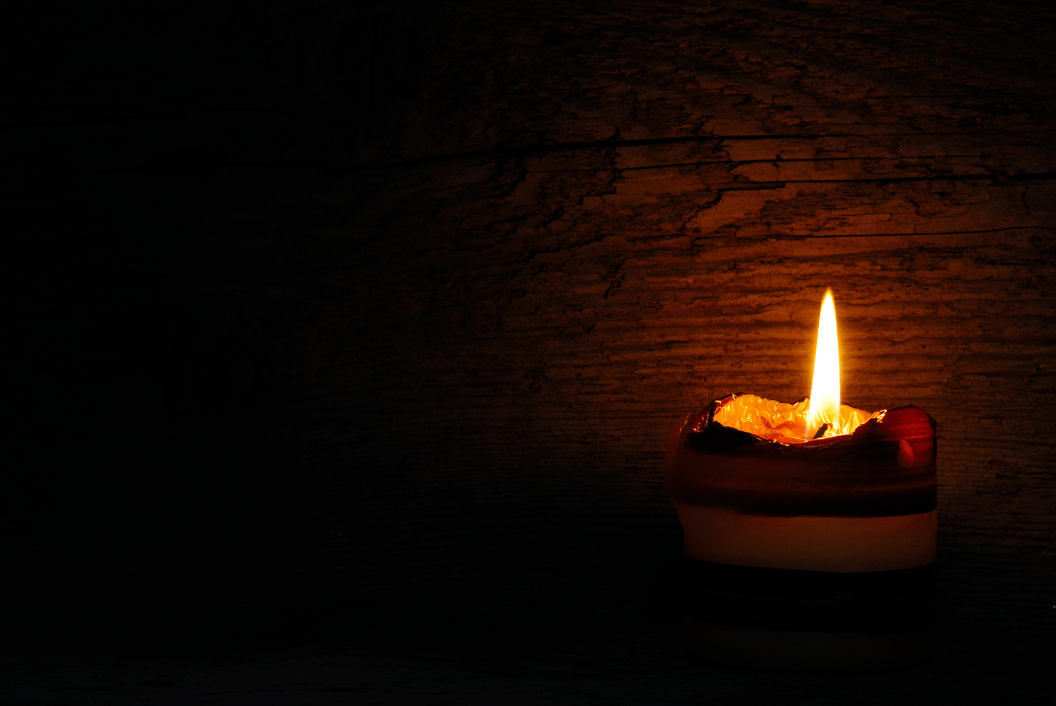
Our light may seem small to us. Insignificant, even. But think of a flickering candle. The tiniest flame still penetrates the darkness. And if we all shine together, think of how bright the light will be. Together we can overcome.
Photo by Irina Anastasiu on Pexels
‘In all these things we are more than conquerors through Him who loved us. For I am convinced that neither death nor life, neither angels nor demons, neither the present nor the future, nor any powers, neither height nor depth, nor anything else in all creation, will be able to separate us from the love of God that is in Christ Jesus our Lord.’ Romans 8:37-39
I gripped the pages with trembling hands, reading and re-reading the words that had made my heart plummet. This was my final evaluation, a summing up of who I was as a twenty-seven year old woman. How could it be that my time at this place was ending on such a bad note?
I’d spent the past two years at a bible college in Tasmania, living in close community with staff, their families and other students—working, studying, eating, sleeping, laughing, singing, crying and praying together. This well-regarded training centre was not merely a place for academic learning. It was a pressure cooker, a refining fire where the jam-packed schedule and melting pot of cultures and personalities drew our well-hidden flaws to the surface.
Every four months, each student met with a staff member to reflect on our progress and pray over any areas of struggle. As part of that meeting, we reviewed a checklist—already completed by staff—which offered detailed feedback on our character. The form in my hands that December morning was my final checklist, my graduation ‘reference’.
Up till that moment in my life, ticks always meant I’d done something right. On the form I was holding, most of the ticks affirmed positive attributes—as they had on my prior reviews. My eyes drifted over them quickly, then came to a screeching halt when they saw ticks beside comments like, ‘Somewhat over-emotional,’ and ‘Struggles with change’. To me, those ticks might as well have been glaring red crosses. If the staff who had journeyed with me over the past two years chose to highlight these flaws so late in my training, they must have felt they had potential to impact on the years that followed.
How right they were.
The ten months leading up to that day in early December had been one long roller-coaster ride as I began a wonderful relationship with my now husband and quickly became engaged. Swirling inside me was a dizzying mix of blissful dreaming and sheer terror. Along with the joy of beginning life with this man came the need to let go of my carefully formulated plans for the future. Just five weeks after our graduation, Mark and I would marry. Beyond that, our future was unclear. For me, that was a very scary prospect.
My growing-up years were as firm and steady as a hundred-year-old oak. Almost all my family’s favourite memories were made in the same house at the end of the same quiet street in the same tiny Sydney suburb where my parents still live. We holidayed in a predictable pattern, heading inland for a dose of farm life at Easter and driving a few hours north in September to swim, fish and sunbathe. My parents followed consistent routines in what time we ate dinner, what days the lawns were done and what tv shows we watched each night. Life was stable and predictable and that gave me a great sense of security. It was no wonder uncertainty made me nervous.
The funny thing was, the closer I grew to God, the more change He brought into my life. The idea of living in total abandon was alluring—I wanted to follow God’s call, not shrink back from His purpose for my life. Yet every time He led me into something new, the drastic changes required had me panicking, wondering if I’d cope. He led me to leave my family and friends to look after orphan babies in Taiwan for six months, spend some time with missionaries in Africa, move to Tasmania to study, marry right after graduating, start a family as soon as we married, homeschool our children for more than a decade, move house six times, move interstate again to an unfamiliar region—this time with three of our four children in tow, unveil my secrets in a memoir and publish it for the world to read . . . and the list continues to grow.
Photo credit Esther Brown
There’s a little habit I’ve noticed I slip into whenever I face major change. I grab onto control wherever I can. It’s kind of a battening down of the hatches ready for a storm—probably in an attempt to control the storm roaring inside me. Thirty years ago my desperate clutching became self-destructive when I focused all my energies on extreme dieting. These days, through God’s healing, it manifests in smaller, more constructive ways. I become more determined to keep the house tidy and the day-to-day routines flowing smoothly. It’s my way of fostering a sense of security, despite the upheaval going on in other areas.
A few weeks ago, I realized I was doing this again and stopped to ponder why. There were staff changes happening at work, my responsibilities were increasing and my husband’s schedule was becoming crazy-hectic. Then came some news from my publisher that meant my book would soon be distributed a little differently. These changes, while challenging, offered potential for good results. But none of them were expected—and I was thrown. I thought, after our crazy COVID year, my life was finally settling down to a manageable rhythm. Yet, everything was still changing and my sudden fussiness about the house showed I wasn’t coping.
I kept telling God I was scared of being overwhelmed and asking Him to give me strength and show me His way through, while on the inside, some part of me was bucking against the whole situation. Why am I always having to change and adapt, Lord? Can’t everything settle down now?
When I finally stopped talking long enough to listen, here’s what I felt God speak to my heart:
“Trust Me. I love you and I am working all this for your good. Every change has a purpose and is set to move you forward. Even closed doors are part of the forward progression, re-directing your course in line with My plans.
None of the journeys of My people have been straightforward. All have had unexpected turns and winding convolutions. It’s all part of the mystery and wonder of adventuring with Me, of learning trust and dependence and security, even when you can’t clearly see the way ahead. Those times when you think you’re settled on a certain course, then everything suddenly changes, confront you with the fact that you’re not in control—you’re not God. They bring you back to that place of child-like dependence, of thankfulness for every provision, every reassurance. And they reveal to you that I am well able to fulfil My plan, even through a different avenue than what you envisioned.”
It’s hard to describe the peace that came with that shift in perspective. Of course, God was working it all for good. Wasn’t that always His way? Every change He’d led me into so far had come with great cost, yet such richness of His presence and goodness that, in hindsight, they became the high points of my journey with Him.
So, again, I made a choice to embrace the adventure, knowing that with it comes growth. It’s all worth it. And really, life would be very dull without God’s unexpected turns. Those ‘surprises’ stretch us and take us to a place of greater intimacy with Him, greater thankfulness and ultimately, greater joy.
‘I will lead the blind by ways they have not known,
I was surprised how quickly I slipped. For several months I’d been mulling over some wonderful truths, gaining understanding and mentally preparing to share them on this blog. I’d learned to see challenges as an opportunity for growth and felt I could approach any difficulty with a positive attitude. Yet all it took was a few unexpected comments at a crucial moment to send me into a spin.
I was six days away from sending my final documents for my book, “Skinny Girl”, to the publisher when an email came from a trusted contact suggesting further edits. By this time—ten years into the writing and editing process—I hoped I had worked through every change that was needed. I was wrong.
The point my friend made was important and I was glad she raised it. Still, I felt myself plummeting into a crazy mental tug-of-war, my thoughts flitting back and forth between accusations of failure and quieter assurances that correction would only help improve the book. Tiredness and hormones added their weight to the gloomy side, whispering in my ear, No matter how many changes you make, there will always be another error to fix, another fault to correct. This is never going to end.
Always. Never. I’d heard taunts like that before. I knew how to deal with them. But that day—my daughter’s birthday—I was too busy bustling through my list of essential birthday tasks, so the struggle simmered on. Late that evening I finally stopped, took a deep breath and verbalised what God had already whispered to my heart. “It’s gonna be okay. God will work it for good.” As soon as the words left my mouth, the inner battle waned and I could view the setback through eyes of hope. When I read the email again next morning, the words that tormented me had lost their sting and I began to get a sense of the way forward.
Sometimes our thoughts seem to run out of control. Like cars on a racetrack, they hurtle through our mind, leaving impressions that guide our decisions—often without us realizing. Some days negative thoughts fire at us like a volley of bullets, making us cower in the corner, unable to function. Sometimes they even make us sick.
But are our thoughts really beyond our control? Are we helpless victims to their fluctuations?
Here’s what I’m learning.
The apostle Paul wrote, “Be transformed by the renewing of your mind.” (Romans 12:2b). He wouldn’t say this unless change was possible. This process of renewal begins the moment we place our lives in God’s loving hands. He infuses us with His life-changing power, giving us a new heart and a new spirit. (Ezekiel 36:26, Titus 3:5) Then He calls us to partner with Him on the journey of transformation—a makeover that begins in our mind.
It’s important to note that the verse in Romans doesn’t say, ‘Sit back and watch while God does all the work.’ It instructs us to, ‘Be transformed’. ‘Be’ is an action word. When we say, ‘Be quick,’ ‘Be thankful,’ or ‘Be quiet,’ we expect the listener to make a choice to do what’s been asked of them. When, through Paul, God says, ‘Be transformed by the renewing of your mind,’ He’s telling us to choose to change the way we think, so we can grow into the people He designed us to be. He doesn’t leave us alone in this. He’s with us—offering strength and wisdom—every step. But the choices we make are vital to the process.
There are many people who’ve already put this principle into practice:
Wise King Solomon advised his listeners to, ‘Trust in the Lord with all of your heart and lean not on your own understanding.’ (Proverbs 3:5-6)
When David battled depression, he told his soul to, ‘Put your hope in God,’ (Psalm 42: 5) Many, many times he made a decision to shift his focus from the hardships in his life—which were extreme—to the goodness of God. ‘My soul is downcast within me; Therefore, I will remember you . . .’ (42: 6)
Isaiah said, ‘You will keep in perfect peace those whose minds are steadfast because they trust in You.’ (Isaiah 26:3)
The writer of Lamentations followed his outpouring of grief over his homeland’s devastation with a determined re-direction of his thoughts. ‘Yet this I call to mind and therefore I have hope. Because of the Lord’s great love we are not consumed, for His compassions never fail . . . great is your faithfulness.’ (Lamentations 3:19-23)
Paul wrote to new Christians, ‘Set your minds on things above, not on earthly things.’ (Colossians 3:2) He told his readers to think about whatever is true, noble, pure, lovely and so on. (Philippians 4: 8)
These verses are the kind we look to for hope and perspective when we’re in a rough patch. We admire the faith of these people and the victories they experienced, often overlooking the fact they made a choice for hope and peace—even while their circumstances screamed pain and hopelessness. They faced their despair and negativity, renewed their mind, rose above the trials and ultimately went on to fulfil God’s purpose for their lives. Their example urges us to do the same. To acknowledge the Lord. Put our hope in Him. Remember His love. Trust in His strength and stability. Call to mind His great compassion. Set our minds on Him and His inherent goodness.
‘Mindfulness’, the practice of slowing our thoughts and calmly observing them, is popular in our world right now. Many people are adopting it as a lifestyle in the hope of finding peace. To recognize what we’re thinking is an important first step— as we see in the example of David. However, like him, we have opportunity to go beyond merely observing our thoughts to leading them into truth.
Through God’s enabling, we can make a conscious decision to redirect the traffic in our mind. As we recognize destructive thoughts and turn them around, the truth will set us free. Then, further transformed, we can press on to fulfil God’s purpose for our lives.
So how do we renew our mind? Here are a few techniques I find helpful. I’ve mentioned some of these before, but they’re so important they’re worth repeating.
1. Read your Bible. Find verses that address the area where you need renewal.
“For the word of God is living and active . . . it judges the thoughts and attitudes of the heart.” Hebrews 4:12
Display truth. Put these words in a prominent place and read them often.
“Pay attention to what I say; listen closely to my words . . . for they are life to those who find them and health to a man’s whole body.” Proverbs 4:20 – 22
3. Meditate. To meditate, in its most general sense, means ‘to think about something very carefully and deeply for a long time’, much like a cow chewing its cud. Journalling can help with this. Dwelling on specific verses over a period of time can help embed them in our memory. Then they’ll be available for us to draw on any time.
“My eyes stay open through the watches of the night, that I may meditate on your promises.” Psalm 119: 148
Speak life daily. In conversation, in prayer, in gratitude. There is power in the spoken word, especially when it’s God’s word.
“From the fruit of his mouth a man’s stomach is filled; with the harvest from his lips he is satisfied. The tongue has the power of life and death.” Proverbs 18:20 – 21
Learn. Listen to teaching related to your struggle on YouTube and podcasts.
“Let the wise listen and add to their learning and let the understanding get guidance . . .” Proverbs 1:5
Sing. Use music that lifts you out of those mental tug-of-wars and into freedom. Lyrics tend to stick with us long after the song is over, so choose carefully.
“But I will sing of your strength, in the morning I will sing of your love; for you are my fortress, my refuge in times of trouble.” Psalm 59:16
Sift. Disconnect from anything you read, watch or listen to that feeds destructive thought patterns. Replace them with good fuel.
“I will not let anything worthless guide me . . .” Psalm 101:3a
The process of mind renewal is a lifelong one and it will often be challenged. It’s good to remember that each time we make a choice for truth, God will strengthen us and give us clearer vision for the things to come.
Photo credit to Joy Van Namen
“. . .we take captive every thought to make it obedient to Christ.” 2 Corinthians 10: 5b
“. . . be transformed by the renewing of your mind. Then you will be able to test and approve what God’s will is—his good, pleasing and perfect will.” Romans 12:2b-c














 It’s important to note that the verse in Romans doesn’t say, ‘Sit back and watch while God does all the work.’ It instructs us to, ‘Be transformed’. ‘Be’ is an action word. When we say, ‘Be quick,’ ‘Be thankful,’ or ‘Be quiet,’ we expect the listener to make a choice to do what’s been asked of them. When, through Paul, God says, ‘Be transformed by the renewing of your mind,’ He’s telling us to choose to change the way we think, so we can grow into the people He designed us to be. He doesn’t leave us alone in this. He’s with us—offering strength and wisdom—every step. But the choices we make are vital to the process.
 The Resting Post