January 15th. With one final sweeping curve I departed Launceston’s outskirts and accelerated down the long, black stretch of the Midlands Highway. The engine hummed and morning rays stretched their glowing fingers over lush paddocks. A flock of cockatoos, snowy white and pale sulfur, winged gracefully over a clear blue canvas, their raucous squawking bringing a smile to my face. Funny birds! Thank you, LORD.What a gift! He knew how much I revelled in watching birds soar—so triumphant, so free!
My eyes dropped to the silver tailgate of Mark’s car just ahead of mine, memories rolling through my mind like an old home movie. Another day two years before. Three Browns; two cars. Mark in his car, Esther and I together, our cat in a cage on the back seat. Long hours, many hours passing bustling suburbs and iconic country towns on the road of adventure into a new season. There was grief in that journey—two of our children had stayed behind—and our hearts bled as the distance between us grew. Still, we took comfort in the three we were as we prayerfully ventured forth. My daughter and I sang, swapped stories and talked through our emotions, wondering what God had ahead.
Photo by Dylan Crandell Photography
Now there were two Browns. And I was driving alone.
God, I can’t believe I’m doing this! Again! A sob swelled in my chest, rising like a mounting wave, clogging my throat and pricking my eyes with tears. This time, when God’s call came to move, our youngest—fresh out of school—chose to stay behind. And I wasn’t ready!
Jesus died.
The words came as clearly as if spoken aloud, reverberating through my aching heart and pausing my lament.
Jesus.Died.
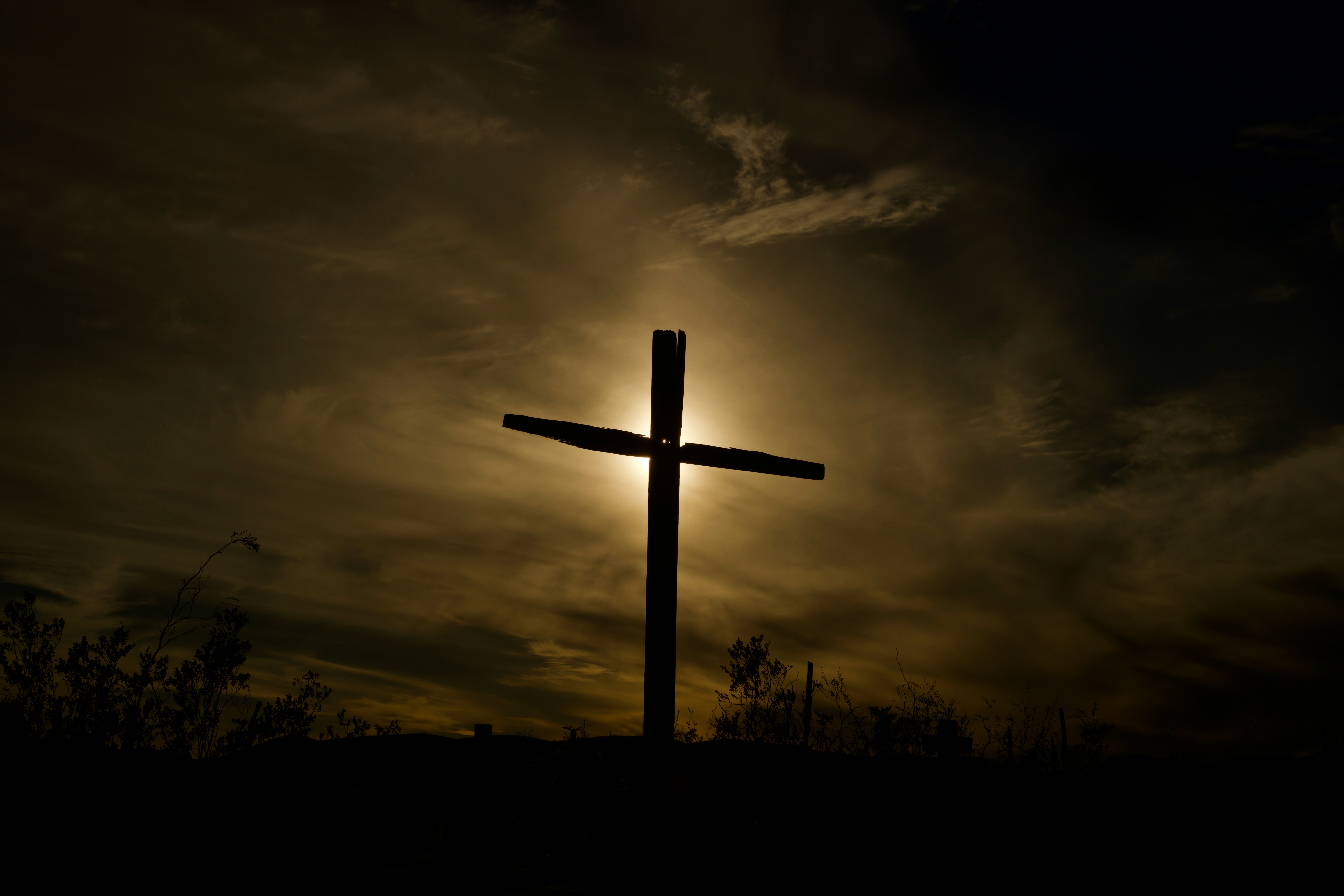
‘Oh, God!’ I whispered, inhaling sharply as I pictured Jesus hanging on the cross. ‘You get it! Your Son died!’ I swallowed, tasting for the first time the pain God endured when He sacrificed His son so I could know Him. Unlike Jesus, my daughter wasn’t dead. She was well, settled in a lovely, peaceful home with good company, and enjoying her first taste of independence. We would only live three hours apart. Still, my mama heart ached.
The cross image faded and another formed: Mark and I standing on a platform in dark suit and white silk gown, eyes closed, heads high and faces aglow, singing, ‘When I Survey the Wondrous Cross’. I drew in a long breath and exhaled through pursed lips as I watched the scene unfold, stunned by the purity—and naivety—of my devotion in that moment. Did I understand then how costly obedience could be? It felt like a lifetime since that day. Could I sing that song now with the same conviction?
Another deep breath, a lowering of my shoulders and I began. Eloquent words of wonder, reverence and surrender penned three hundred years ago carried from my lips, each inscribed on my soul as I voiced them. Jesus—the Prince of glory—died! He bore the weight of all myfailures and the punishment I deserved, surrendering His body, soul and spirit to suffering beyond my comprehension. Jesus knew how painful obedience could be. He knew! And He was with me in my grief.
I reached the crescendo, my heart weighing each word as they poured from my lips.
‘Were the whole realm of nature mine, that were an offering far too small. Love so amazing, so divine, demands my soul, my life, my all.’
There it was—perspective. Even if I owned the whole world, it would not be enough to repay God for His gift to me.
Photo by Duncan Sanchez
CT Studd’s words rang in my ears,
‘If Jesus Christ be God and died for me,
then no sacrifice can be too great for me to make for Him.’
What option did I have? Jesus had given His all for me. How could I not surrender my life in return?
I sang the last line again—and again—nodding slowly as I stared down the highway into an unclear future. ‘Yes, LORD. You are worthy.’
His response was immediate. And just as I have led you this far, I will hold you all the way. Your family too. All is well, darling. And all will be well. Trust Me. I’ve got you. All of you. And I am working all this for good.
‘If anyone would come after me, they must deny themselves and take up their cross and follow me.’
Matthew 16:24-25
‘In all things God works for the good of those who love him, who have been called according to his purpose.’
Sunday morning. I stretched my hand across wrinkled sheets on my husband’s empty side of the bed, opening one eye just enough to make out the time on his bedside clock. 5:50am. Ugh! Not exactly a slow start on my so-called day of rest. At least I wasn’t the first one awake in our house.
I flopped onto my back, air whooshing from my lungs. Another day—a different day. Yet my pulse throbbed in my ears the same way it had every other morning that week. Maybe my heart was trying to keep pace with my rushing stream of thoughts, like a frantic mother chasing her runaway toddler. I switched on the bedside lamp, its pale, yellow light filling my corner of the room, and covered my eyes. LORD, I’m so tired.
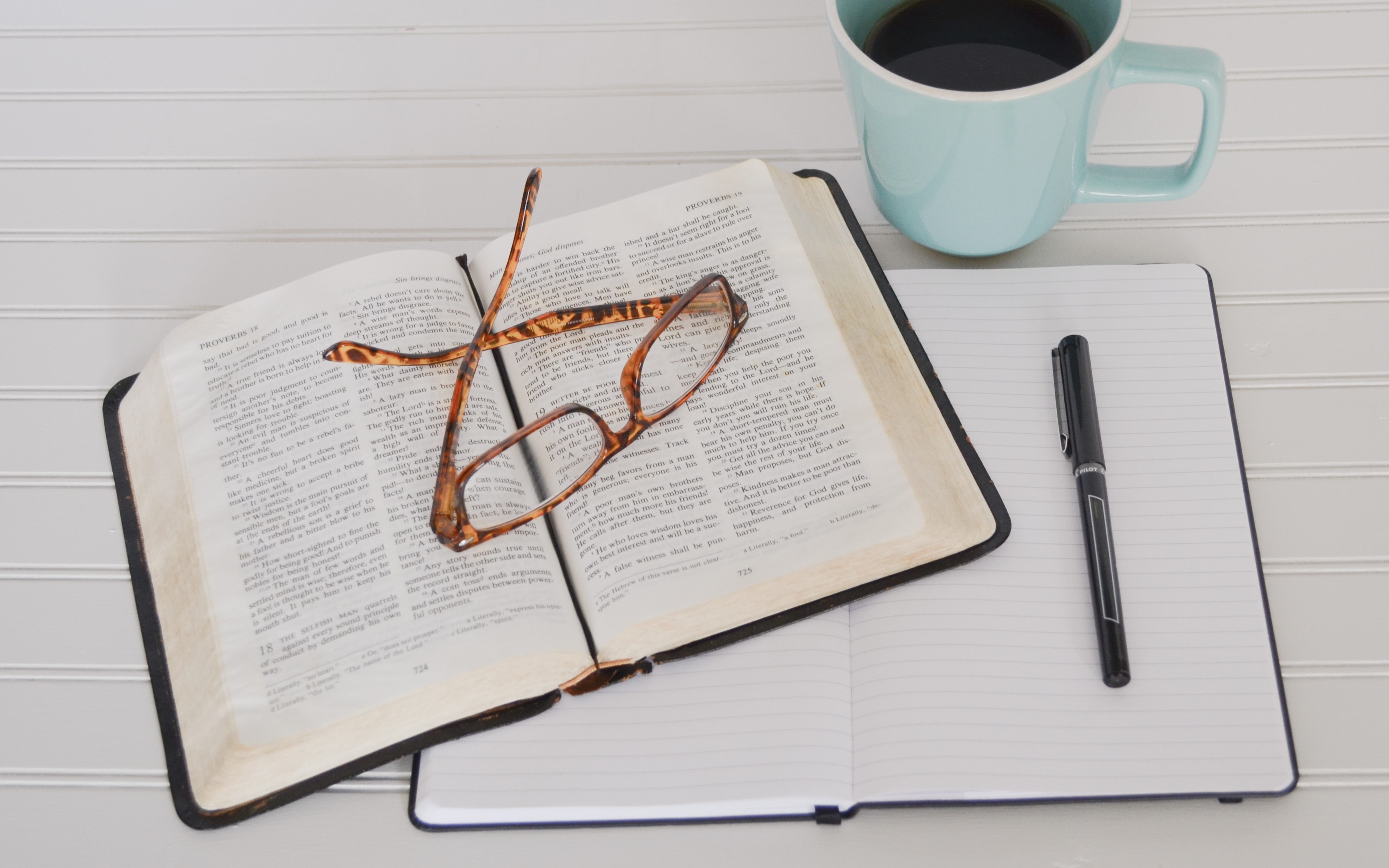
For a while I lingered there, wavering, longing to pull the covers over my head and sink back into a dreamless slumber. Yet my soul was parched and panting, desperate for fresh water. I pulled two extra pillows from the floor and sat upright, propping them behind me, then gathered my bible, journal and pens. Closing my eyes, I inhaled slowly, praying, Thank You, LORD. A new day. Eyes open, I turned to a fresh page in my journal and began to write.
‘Sunday 24th July, 2022.
6am.
LORD, I put my hope in You. You are my strength and my song.’ Those words were sincere—an expression of faith. But on that morning, none of them felt real. ‘Father, my heart is downcast,’ I wrote. ‘My body and emotions are weary.’ I paused and sighed, my shoulders drooping. ‘I look to You—my help and my strength—and lay before you all my struggles . . .’
Out through my pen and onto the page the words flowed, psalm-like—an inky, itemised confession of every battle and every negative emotion that weighed so heavily on my heart. Three months earlier, my husband and I had begun a season of intensive training—a fast-paced, schedule-cramming blend of paid work, online study, manuscript writing and course creation, all while preparing our family for a massive interstate move. As lovers of slow time and simplicity, we found the pace exhausting.
‘LORD, I’m not sure I can keep doing this.’
I pressed my lips together in a grim line as I stared at the words—so confronting, but true. My endurance and hope were waning—fast.
Busy seasons in our past had taught us that working non-stop was not sustainable. Yet here we were, doing everything we knew we shouldn’t—spending long hours, late hours glued to our computer screens, hijacking family mealtimes by ‘talking shop’, and prioritising productivity over time with friends. And under the surface simmered all the unanswered questions about our upcoming move, adding further to the weight of our load.
The cracks were starting to show. Special events I’d normally enjoy had become ‘disruptions’ to my task list. I felt an alarming disconnection from our children—and at times even my husband. Some nights I lay in the darkness, my whirring mind, ringing ears and aching head all screaming, ‘Stop!’ And the breathlessness I’d battled during our last major move was rearing its awful head again.
We had reached the halfway mark in our online course, so the pace would slow in three more months. I was looking forward to that. But right now, my view of the finish line was obscured by so many hurdles, those three months looked more like three years.
This was not how we wanted to live. We knew life was better with balance and breathing space. And yet . . . conviction rose in my spirit. ‘And yet I know You’ve called me to it.’ That one detail made all the difference. Yes, my body and soul were groaning, yearning for a return to easier days. But God was in this demanding season—we knew He was—which meant He must have a purpose in it and a way for us to walk through it. Didn’t He always?
Even while we loathed the busyness, our spirits were soaring in gratitude for all our Father was doing. These were exciting times—times of growth and equipping, ready to launch into new things. I nodded as I wrote, ‘God, I belong to You. My life is in Your hands. You are my God and I know You are good. Please fill me with Your Spirit and renew my strength in Your presence.’
I felt my heart begin to settle—as it always did when I surrendered. My gaze shifted to the previous page in my journal, where the day before I’d copied a contemporary translation of Psalm 23:6.
‘So why would I fear the future?
Only goodness and tender love pursue me all the days of my life.
Then afterward, when my life is through, I’ll return to your glorious presence to be forever with you!’
(The Passion Translation, Psalm 26:3)
David’s bold declarations fuelled my flickering flame. Why should I fear the future? God was with me on this journey, eager to do me good. With Him by my side, I always had a reason to be confident. Even now.
Below the verse I’d written some notes from further study, then recorded in red the words I sensed God speak.
‘So, I am pursuing you now with my goodness and kindness. Hunting you down, running after you, ensuring you have all you need for each day. Look, see and give thanks and you will see more and more.
Don’t focus on areas that seem to be depleting. Fix your gaze on My face and expect to be satisfied in and by Me each day. I will always supply what you need as you seek to walk in My purposes.’
‘Look, see and give thanks and you will see more.’ I reread those words, underlining them, then flicked back a couple more pages, hunting for more red writing. A few entries earlier, I found, ‘My gifts are there for you every day. THANKSGIVING opens your eyes to see them.’
‘Ingratitude is an eye disease every bit as much as a heart disease.’ (emphasis mine)
Did I have an eye disease, I wondered—a distorted view that magnified the negatives and was blind to God’s gifts in each day? If I did, something needed to change.
The following week, unprompted, a mentor gave me this counsel: ‘Thanksgiving is vital to keeping your heart in a place of rest and sensitivity to God in this busy season. As you choose to give thanks, He’ll show you how to live by His grace.’
There it was again—thanksgiving. I’d already started scribing a few short lines of gratitude each day. But God was calling me to more, urging me to stop and really see. So, when our church began a 30-day fast, I chose to skip breakfast and spend longer in prayer. This gave me more time to reflect and thank God for His blessings. And as I did, I noticed the weight I’d been carrying begin to lift.
Then came the morning I woke at 3am. For an hour, I lay still and quiet in the silence, wondering if I’d drift back to sleep. Finally, I saw my opportunity, climbed out of bed and shuffled to the lounge with my books.
‘Thursday 11th August, 2022
3:55am.
Lord, I am yours. Thank you for your faithful love and readiness to teach me your ways. Keep working in my heart and mind and body, leading me through in your grace, truth and rest.’ Joy bubbled inside me, despite the early hour. God was doing so many wonderful things. Now I had extra time to record them. I moved my pen to a new line.
‘I’m thankful for . . .’
I began listing all the ways our family had been blessed in recent days, pausing between each point until another memory came to mind: a sunny rental home for an adult child; protection from injury in a car accident for another; some promising job interviews for our uni graduate; the warmth and generosity of our local mechanic when a car broke down; my husband’s loving support and listening ear when I was feeling low, and more.
Once I’d covered that angle, my thanks continued to flow: my lovely, capable osteopath; some new opportunities for book sales; the daily challenges and opportunities of my work role; the wise words and loving prayers of my mentor, and my lifeline—the Bible.
The longer my list grew, the more I recognised God’s faithful care. By the time I finished, an hour had passed and I’d filled a whole page of my journal with reasons for gratitude. And my heart felt lighter—even a little bit hopeful. God was moving—protecting and providing, moulding us and directing our circumstances ready for the changes ahead.
Time didn’t always allow me to write such long lists. It was a few days before I wrote my next, shorter one. Several more slipped by before I wrote another. Over time, I developed a habit of writing a list most days. Sometimes I gave thanks for ‘basics’ like warmth, shelter, a comfortable bed, clean water and a kitchen full of food—luxuries we enjoy while so many people in the world don’t. On other days I wrote in awestruck detail of the way the practicalities of our move—large and small—were coming together. Worry and weariness began to fade, driven out by the light of hope, and I noticed a new spring in my step. God loved us. He was good. Just as He was faithful now, so we could expect Him to continue to lead us through.
A year has passed since that pivotal time and I’m still writing lists—sometimes in my journal and often aloud as I tell others of God’s generosity and kindness. On my birthday in June, my husband described me as a woman who, ‘notices and celebrates every little thing’. He couldn’t have given me a greater compliment! On this path of thankfulness, I’m learning to see the good in every situation. And to understand that David’s words in Psalm 23:6 are more than just lovely poetry. They are a living reality. Every day, God passionately pursues each of us, ready to show us His goodness.
The question is, are we stopping long enough to notice?
‘Surely your goodness and love will follow me all the days of my life . . . ‘
Psalm 23:6
‘Those who hope in the LORD will renew their strength. They will soar on wings like eagles; they will run and not grow weary, they will walk and not faint.’
I couldn’t help but giggle when the message from my husband appeared on my phone.
‘You are hereby cordially invited to an evening stroll at the beach
Friday 2nd September 7pm.
Fish and chips will be served as part of the festivities.
Dress: warm.
Please RSVP to this address within 24 hours.
LM.’
Cordially invited for fish and chips? Ha! And the signature, ‘LM’? That was a code name from our early days as a couple—a reminder of a time when our relationship was fresh and new. This invitation breathed fun, escape and romance. But would I accept?
For five months Mark and I had been studying, planning and writing in preparation for some new ‘God-ventures’. We spent many evenings and most Saturdays on our computers, often in the same room, yet so engrossed in our individual tasks, we rarely talked. When we did chat, it was usually about our projects or some other family issue we needed to address. We both relished the growth and momentum in this new season and were grateful for what God was doing. But after five months at the same hectic pace, the intensity was taking its toll.
What we really needed was some light-hearted fun. But breaking out of task mode didn’t come easily. When Mark’s invitation came, my happy thoughts quickly gave way to reasoning. I don’t really want fish and chips.I’d rather eat something else. Maybe we can get Thai—but that’s not so easy to eat at the beach. By Friday, I’ll probably be too tired to go out and it’ll be dark and cold at the beach. Maybe we can just do something at home like we usually do. . .
My thoughts spiralled downwards until I felt a stern inner rebuke. Stop!Just stop!
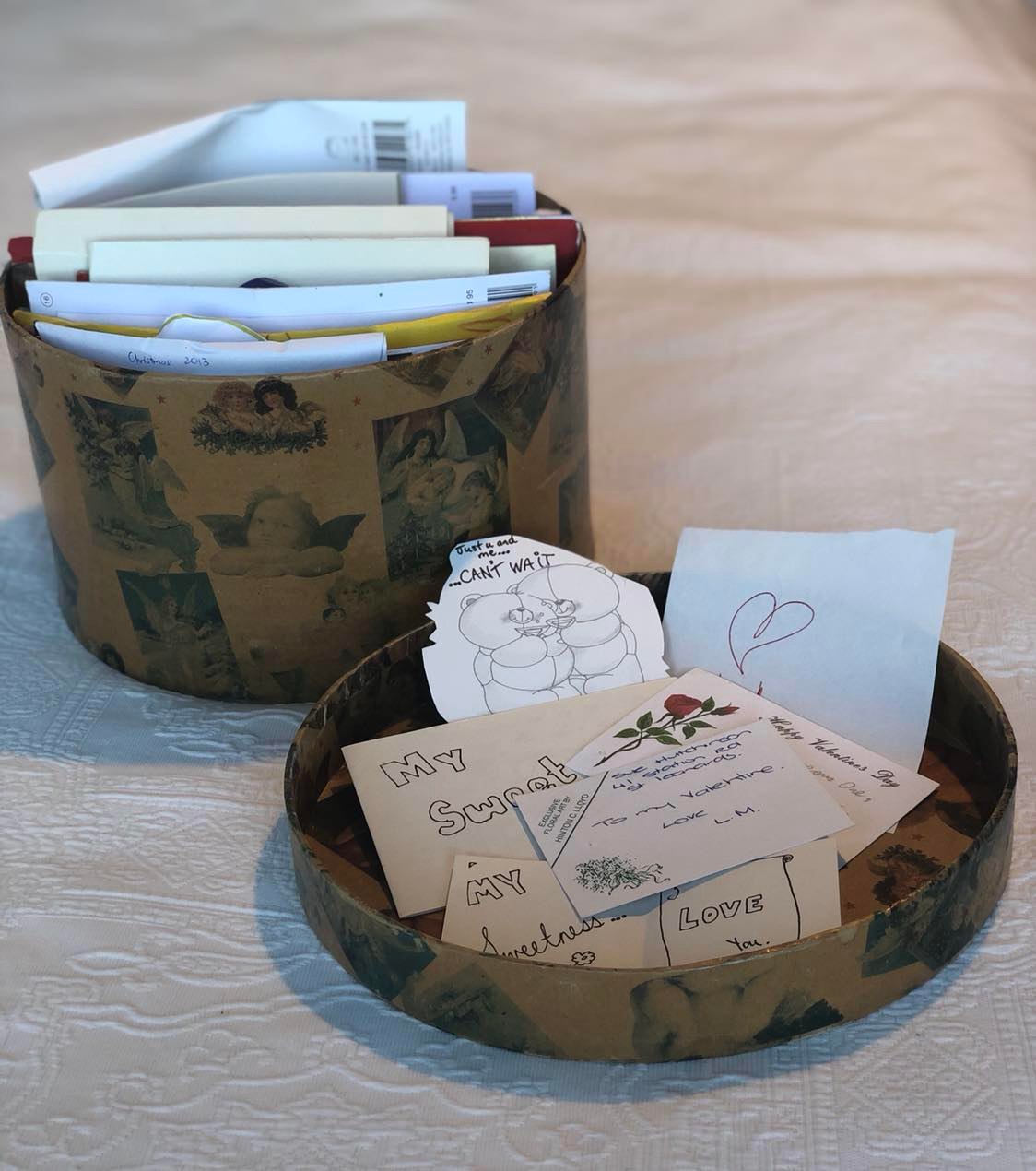
What was I doing? When did I get so fussy? My husband was asking me out on a date! A cute, simple date like we enjoyed in our early days, when we were besotted bible college students living on a tight budget. Back in the days when he was LM—‘Lovely Mark’—who picked fragrant roses from the garden on campus and wrote beautiful notes for me, signed ‘LM’. Lovely indeed! In those days, I wouldn’t have cared where we went or what we did, as long as we were together.
Go, and be thankful, I felt God whisper. Take this opportunity and enjoy!
Of course. I could choose to lay down my preferences and receive what Mark had so thoughtfully planned. The only way to receive the gift being offered with an open hand was to loosen my grip.
Firmly rebuked, I nodded and typed a quick reply:
‘Thank you, sir, for your kind invitation.
It is my honour and pleasure to accept. Xxx’
Friday rolled around, along with an ominous bank of grey clouds. While the sky darkened, we rugged up in thick jumpers and track pants and climbed into the car with our teenage daughter. We dropped her at youth group, bought our dinner at a local take away then drove to a headland overlooking the ocean. The wind was crazy-wild, roaring so powerfully up the slope that our car shook and shuddered under its force. It was too cold for a walk so we sat in the car—warm and cosy—munching on golden fish and chips and watching seagulls zip and slide on the howling gusts. Mark reached out the window with a chip and we watched one of the birds flap frantically just to get in position to snatch that morsel from his fingers. We laughed, we talked and our uptight minds began to unwind. And as they did, we remembered—who we were and where our love began.
The conversation drifted through our early memories—the days we went cruising along winding country roads in Mark’s big, old station wagon just to have time on our own; the evenings we bought lamb souvlakis from a little shop in Launceston then sat by the Tamar river, savouring quiet conversation and watching the moon’s reflection ripple on the water. Those were beautiful times when we dreamed of all the adventures we’d share once we were married. Our hearts were full of hope and anticipation.
And now, here we were, twenty-six years on—parents of four, soon-to-be grandparents—still dreaming and adventuring with God. Our voices grew soft and our words full of wonder as we remembered the ways God had led us through every predicament and breakthrough, every heartache and victory, through all the years between the days of LM and the present.
God’s presence and peace were so real, our car felt like a holy place.
Sometimes in marriage, it’s only by stripping away all the layers that build up around our relationship that we can strengthen our foundations.
We both felt it then—that shift in our hearts. Suddenly our long to-do lists and the busyness that had dimmed our joy seemed like no big deal. God hadn’t changed. Just as He had seen us and our children through all the years past, He would be enough for us in this new unfolding—whatever it held.
Our God was good. We could trust Him.
That night, what began as a simple date grew into something much more powerful. A time of celebration. A time of prayer and fresh surrender. A time that carried us home revived in hope and gratitude for the relationship we shared—a gift from God, made strong by His grace.
On Christmas morning, my husband and I were up well before our children—not so unusual now they’re all teens and young adults. The weather was cool, so I pulled my robe from the cupboard and wrapped myself in its warmth. While my husband busied himself in the kitchen, I made a hot drink then moved to the lounge, where I sank into the couch closest to our Christmas tree.
Up till that point, my days had been full of activity. Finishing the year at school, sorting final details for the design of my book, making gift lists, shopping lists, lists of things to cook, shopping then chopping and baking and creating in the kitchen—all the while my mind whirring with everything I needed to remember and consider and organise.
Finally, on this special day, there was time to stop all the activity and savour the moment.
Coloured lights glowed in the semi-darkness, drawing me in and slowing my mind and heart. I wrapped my hands around my mug and sipped, smiling as my eyes drifted between the decorations adorning our tree. There were felt stars and hearts and stockings, odd-shaped and lumpy with stuffing, sewn by eager little hands so many years ago. Nearby were wooden figures, large and small, painted by the same hands a year or two later. Red and white tasselled triangles took my thoughts to a visit from old friends, missionaries to Tibet. There was a swirly purple bauble I’d received from our mothers’ group and a red satin chilli given by friends from New Mexico when we celebrated Christmas together, in Taiwan, thirty years earlier. There were baubles and beads and sparkly stars, each looped over the ends of bristly green branches.
Our tree wouldn’t be chosen to grace the pages of a Home Beautiful magazine. It didn’t stand especially tall or impressive. In my eyes, though, it was a treasure trove, covered with emblems of life and love and the beauty of relationships.
My heart was full as I gazed at the display before me. Truly, we were blessed. Those decorations represented relationships I’d cherished over the years. The time and effort that went into making or choosing these ornaments was an outflow of the love we shared. A prayer lifted from my heart. Lord, thank you! Thank you for all the people you’ve brought into my life and the special times we’ve shared. I’m so grateful. Far beyond any material gift I could be given, I valued the gift of relationship.
My thoughts moved on to Jesus, the reason for Christmas—for the carols we sang, the gifts we shared, the feasting and goodwill to those beyond our home.
How could I put into words my gratitude for Him?
God gave His very best, His own Son, to show the world His love and power. When Jesus lay down his life on the cross, He offered forgiveness and rescue from all our failings and invited us into God’s family, with all its privileges. The most astounding gift I’ve ever been given is to belong to God and have Him walking with me through every day, every season—even the unexpected challenges of the past year. I can’t imagine facing any stage of life without Him.
My relationships with people would wax and wane as time and movement affected our level of connection. But God’s presence with me would be constant, bringing deep peace and security to my heart. He knew me. He loved me. He would never stop loving, even for a second, for His entire essence was love.
Whatever the days ahead would hold, whatever surprises the new year would bring, God would be there. He would lead me through every season, all the way into eternity, and through the process our relationship would grow stronger.
I pulled my eyes from the tree, climbed off the couch and strode to my phone. It was time to put on some carols. There was so much joy bubbling up from my spirit, I couldn’t help but sing.
“See what great love the Father has lavished on us, that we should be called the children of God!”
1 John 3:1
“Here I am! I stand at the door and knock. If anyone hears my voice and opens the door, I will come in and eat with that person, and they with me.” Revelation 3:20
This blog was birthed out of a season when I was a stay-at-home mum in Tasmania savouring slow time after eleven years home-schooling and a bout of serious illness. Rest— body, soul and spirit—was my primary focus. I savoured leisurely days in our spacious, sun-drenched home—reading, praying, writing, pottering in the kitchen and garden, reflecting on life with dear friends and finding joy in simple pleasures. My eyes were opened afresh to the wonders all around me—plump spring buds, alpacas frisking in the back paddock, fairy wrens hopping on the lawn in search of food.
In that season, God taught me how to enjoy ‘just being’, secure in His love irrespective of what I achieved. Like an ailing tree in fertile soil, I plunged my roots deep into Him and marvelled at the quiet strength anchoring me as I transitioned back into normal life.
Today I live almost 1400km north in Wollongong, the third largest city in New South Wales. Wollongong is a city of contrasts. Its golden ribbon of coastline and lush rainforest speak of adventure, discovery and relaxation.
Then there’s Wollongong’s busy face. I see it in the endless plume of steam rising from the steelworks, the creaking of the coal train as it rocks back and forth along its time-worn track, tall cranes reaching skyward as they lift materials for yet another apartment block and the myriad of people coming and going—always coming and going. I, too, am one of the busy ones these days, bustling out the door four mornings a week to play my part in the local workforce.
The hours I spend at home now are carefully apportioned between family, housework, writing, reading and seeking God for fresh strength to juggle it all. Many nights, dissatisfaction grumbles as I climb into bed. I didn’t get through my to-do list. Or I stayed up much too late trying. There’s an unrest I’ve noticed creeping into my heart—a frustration with my lifestyle and desperation to find a better balance. I’ve tried allocating small time periods for demanding tasks, hoping to chip away at them gradually over time. This gave me some sense of progress, but not enough to restore the peace and rest I used to enjoy.
A few weeks ago, in weariness of heart, I turned to Matthew 11:26-28, where Jesus explains that we find rest by coming to Him. Lord, I’m already coming to you—every day—and still I’m not at rest. I’m restless! How can I find that place of calm again when life is so hectic?
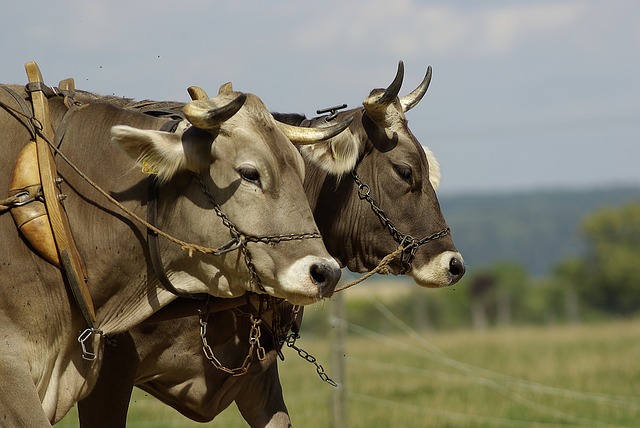
With soul open and thirsting, I read through Jesus’ familiar words. He spoke of the yoke, a timber crosspiece laid across the necks of two oxen so they can work together, the lead ox bearing the load’s weight and setting the course while the younger ox—the novice—walked beside.
Image by 2211438 on Pixabay
“Take my yoke upon you,” Jesus said, “and learn from me, for I am gentle and humble of heart, and you will find rest for your souls.” He said His yoke was easy and His burden light. Clearly, if I felt so heavy-laden and discouraged, I wasn’t wearing His yoke.
This made me wonder, did my circumstances need to change? In some areas, the answer was yes. I had set too many goals, was trying to squeeze too much into each day. I needed to recognise my limits and let God sift my priorities. I knew the busy weekdays would remain as He had clearly led me into my job. But there were other, optional pursuits I could lay down—at least for a time.
I sat quietly, pondering this, until a clear realization cut through my thoughts. Changing my routines might offer some relief. But my circumstances weren’t the problem.
The real issue—the root of all my unrest—was the state of my heart.
Most of the weight I was carrying came from the expectations I put on myself—to perform, to achieve, to keep everything under control. Added to that load was my frustration over my limited time at home. Wistfulness had grown into resentment, a heavy burden that made me drag my feet and overlook the blessings in each day.
My focus shifted again as I felt God draw my attention to the posture required to take on a yoke. The young ox had to bow its head—and thus its will. To bear well the yoke it had been given and fulfil its purpose, it needed to align its body with the lead ox and submit to that ox’s strength and wisdom.
I sensed God speak to my heart, Yieldedness is the place of rest. As you choose to trust Me and bow to My will—the yoke of My choice for this season—you’ll feel the burden lift. Then there will be a new lightness and ease in your days.
Image by skeeze from Pixabay
Ah, yieldedness. That surrendering of control and laying down of our own efforts. It’s something we might fear and try to shirk, yet it offers a path straight to rest. The author of Hebrews said anyone who enters God’s rest ceases from their labour. That means we throw off the mindset that says it’s all up to us, that we need to wrestle and juggle and figure everything out. Yieldedness means letting go and taking our place as the learner beside the Lord, fully aware of our frailty and trusting in His rock-solid, abiding presence. It means surrendering each situation and each relationship to Him and trusting Him to show us the way through.
Humbled, I yielded. I recognized the yoke Jesus had given me was just what I needed—whether I thought so or not. As I surrendered, I recognized and began to thank Him for the many gifts in my busy life—the beautiful and challenging people who cross my path, daily opportunities to learn and grow, the shelter and peace of our home, the family I gather with over candlelit dinners who devour mountains of food and create piles of dirty dishes. The more I thanked God, the more clearly I could see. I was blessed! And shining brightly above all God’s gifts was His constant, strong presence beside me—a source of stability, nurture and enabling to do far more than I thought I could.
This rest of God is not dependent on our physical condition or our circumstances. It flows from a state of firm confidence in Him—His kindness, His ability, His constancy—and cannot be taken away, unless we allow it. If I shift my focus away from the Lord and onto myself, my rest is quickly stolen. Knowing my own weakness, I now begin most days with this prayer.
Lord, thank you for this new day. Please make it what you want it to be and lead me through it. And make me who you want me to be, Lord. I want to walk with you.
The moment those words lift from my heart, my perspective is renewed and I’m released from the drive to strive. I feel His response. Rest in me, daughter. I am more than enough for you.Trust me and I will show you the way through.
Daily, God calls me into His rest. He’s calling you too. He wants all of us to dwell in that place of intimacy and peace and strength in Him. It’s only by remaining yielded, yoked with Him, that we can walk in His plans and bring Him the honour He’s due. That is our highest purpose.
I’ve just reached the end of a pretty crazy term. My husband started studying (two courses simultaneously), I picked up a few extra hours at work and, on top of that, had an important deadline to meet for some writing submissions (I have appointments with a couple of publishers at a writer’s conference in a few weeks). And it was the winter term at school, when fatigue was high and illness common. Despite all that, I’ve reached the end of term healthy, happy and (mostly) at peace. Finally, it seems, I’m learning to be more strategic in the hectic times.
Here are my nine top tips. I hope you find them helpful.
Remember Your Creator
Make time to still your heart in God’s presence—daily. Remind yourself He is the only source of life and hope. Worship, give thanks, feed on His Word and listen to His whisper. He knows all your day will hold and wants to show you His way through.
“Whoever dwells in the shelter of the Most High will rest in the shadow of the Almighty. I will say of the Lord, ‘He is my refuge and my fortress, my God, in whom I trust.’” Psalm 91:1-2.
Remember Who You Are
You are a child of God, created for a purpose. If you’re putting Him first and seeking His direction, every season you pass through—even the crazy-hectic ones—are being worked together to equip you for what He has ahead. You can be confident He will work even the hardest of times for your good.
“And we know that in all things God works for the good of those who love Him, who have been called according to His purpose.” Romans 8:28
Prioritise
Cut back on the extras. Weigh up your options carefully. What are your most important relationships? The crucial activities that can’t be compromised? Consider putting aside surplus involvements for a while, so you don’t run yourself dry. God’s priorities come with firm conviction and peace. ‘Extras’ push us into stress and striving.
“The Lord makes firm the steps of the ones who delight in Him; though they stumble, they will not fall, for the Lord upholds them with His hand.” Psalm 37:23
Nourish Your Body
Eat food that makes you feel well and gives you lasting energy—physical and mental. Do some form of exercise that you enjoy and get those happy endorphins flowing. And put yourself to bed early when you can. A good sleep makes everything look brighter.
“In vain you rise early and stay up late, toiling for food to eat, for while they sleep He provides for those He loves.” Psalm 127:2
5. Slow Your Mind
Put your tasks and technology aside, turn off the background noise, look around you and breathe. Spend time outdoors. Drink in the beauty of nature. Quiet your heart and savour stillness. Just slow down—even for a moment.
“He makes me lie down in green pastures, He leads me beside quiet waters, He restores my soul.” Psalm 23:2-3a
Embrace the Sabbath
Right from the beginning God planned weekly rest days for our good. Try to set aside a whole day where you put aside the usual busyness, refocus (see point 1) and do something that refreshes you. As we recreate, we are re-created ready for the week that follows.
“For six days work is to be done, but the seventh day is a day of sabbath rest, holy to the Lord.” Exodus 31:15a
Be Creative
If you have the desire, make something beautiful or purposeful—take some photos, pot a plant, compose some music, transform a piece of furniture. As God’s image-bearers, each of us has some inherent form of creativity. Perhaps the joy we feel when we create something special is because we’re reflecting our creator.
“God created mankind in His own image, in the image of God He created them; male and female He created them.” Genesis 1:27a
Be Spontaneous
Those busy seasons can become very monotonous, as they are for the mouse in the wheel. Try to be a little bit spontaneous and break out when you have opportunity. For my husband and I, that meant a last-minute dash to the cinema to watch a light-hearted movie on a day that was looking very task-focused. Good fun!
“See! The winter is past . . . Flowers appear on the earth . . . Arise, come, my darling; my beautiful one, come with me.” Song of Songs 2:11-13
Communicate
Don’t be afraid to acknowledge your limits and accept help. Even if there are tasks you see as your responsibility, if you’re under the pump and someone is offering a hand, say yes! This doesn’t make you a failure, rather it grows you in humility and gratitude. There are sure to be times when you can pick up the slack for someone else when they’re under pressure. It’s all part of being a body.
“Now you are the body of Christ and each one of you is a part of it.” 1 Corinthians 12:27.
My struggle that morning caught me by surprise. It was the same staff prayer meeting I went to each Tuesday. Normally I relished listening to one of my colleagues speak then joining a small group to pray. But on that particular day, captive in the front row – the only seating left when I arrived – I felt terribly conspicuous. At any moment, I was certain, I would burst into tears.
My eyes welled and I blinked the tears away. My nose began to run and I blew it as quietly as I could. I shuffled in my seat and fiddled with my handkerchief, trying to contain the emotions welling inside me. A friend as close as family was speaking that morning so I avoided his perceptive gaze. But I couldn’t drag my eyes from the image he’d projected on the screen before me.
It was an ECG printout – a series of sharp upward and downward spikes that reveals the rhythm of a human heartbeat. My friend was comparing it to our time on earth. “This is life,” he declared, pointing to the sharp peaks and deep troughs sitting juxtaposed across the screen. “Real life has its highs and lows for all of us. But this . . .” He pointed to the flat line which trailed at the end of the reading – the indicator that the heart had stopped beating. “This is not life – this place where we try to make our world so stable and comfortable that nothing really happens.”
I swallowed, nodding my agreement. Despite the heartache which at that moment felt overwhelming, I wanted to embrace life, not meaningless predictability. The thought of saying goodbye to all our dear friends and everything familiar in a matter of weeks loomed as one of the lowest points my heart had ever faced. Yet deep inside me burned a quiet certainty – there was purpose in this valley.
I managed to restrain my emotions that morning till after the talk was over then let a few tears leak out in the safety of some friends. They smiled and sympathised and rubbed my back, all the while pouring out sincere prayers for our family. And so I was given the strength to smile and march bravely through another day.
Ever since that morning I’ve been pondering this topsy-turvy world I entered when I first surrendered to God. His principles often don’t seem to make sense yet they offer unexpected blessings. He speaks of laying down our life and being given a new one. Losing then gaining. Humbling ourselves and being lifted up. Giving generously and seeing our own needs met. Being insulted and receiving the affirmation of heaven. Every loss is met with a gain that not only brings renewal but goes far beyond what was sacrificed – so typical of God’s generous heart.
So what is the purpose of the giving up, the letting go? If He’s only going to provide what we lost why does He ask us to lay it down in the first place?
Because it’s in the laying down, the dying that we are transformed.
It’s when we loosen our grip on all we consider ours that we realise afresh how blessed we are, that everything we have is a precious gift from our Father, to be embraced with thanks. We’re reminded that apart from Him we can do nothing and of how utterly we need to rely on Him to live this zigzagging, up-and-down life.
From the very beginning of this moving process, God has been speaking to me about the new things He’s going to do in our lives, the new people and experiences and opportunities ahead. But right now, it’s hard to see beyond the losses confronting us.
I’m reminded of Jesus, who laid down His everything for us, enduring suffering beyond compare as He died, rejected even by His beloved Father. He didn’t want to go to the cross. He asked for release from that ordeal, sweating drops of blood in the intensity of His agony. Yet He yielded. Because He knew there was something beyond the suffering. Hebrews 12:2 tells us it was for the joy set before Him that He endured the cross. Jesus made it through because He had His eyes on the prize that lay beyond the grave. Beyond. That’s a good place to fix my eyes.
For me right now, the prize is still a little unclear. It’s hard, really hard, to hope when you can’t see much of the detail in the beyond. Daily I ask God for reassurance. Where will we live? Who will be our friends? How on earth can anything be as rich as the life and relationships we’ve enjoyed here?
His response, every time? Trust Me.
Trust isn’t grown at the high points of life. It’s formed in the valleys – the times when the darkness is intense and we’re not sure we can endure much more. Being reminded of this helps me accept that this time in the trough is necessary. But I also choose to believe God’s promise – it won’t last forever. There is more beyond this. More life. More people. More everything we’re being asked to lay down. Different . . . but still good – because it comes from His hand.
And when He lifts me up from this valley, I’m trusting I’ll be different to who I was when this descent began. More thankful, more dependent and eager for all that He has in store.
Tuesday 23rd July, 2013
“Do you think we should go to the hospital?” My husband’s gentle words broke through the haze that clouded my mind.
I dragged my head up and sighed. For hours I’d been lying on the bedroom floor, mostly face down, trying to find a position where my body didn’t hurt so much. It had taken all my strength to pull myself up and vomit into a bowl. The noise had woken Mark and he’d climbed out of bed to come to my side.
I had hoped this sickness – whatever it was – would have settled through the night. Surely after almost two days I should have been improving? Instead the mild nausea of Sunday afternoon had developed into violent retching, diarrhoea, shaking fevers and overwhelming weakness. Tightness under my ribcage on one side made breathing difficult and my head spun.
Mark had already suggested I go to hospital – several times. Each time I’d refused. The thought of spending hours in that condition in a waiting room full of people was unthinkable. This time, though, he was determined. “I think we should pray about it.”
“What time is it?” I breathed.
“Four o’clock.”
“Okay. I’ll try.”
We spent a few moments waiting quietly. Meanwhile, unknown to us, my mum was suddenly awakened in Sydney with a strong urge to pray for me – she already knew I was very unwell.
“So, what did you think?”
With eyes closed, I mumbled, “I just keep getting the word ‘appendix’.” Low in my abdomen a sharp pain throbbed on the right. “Maybe we should just go and get it checked.”
“Okay.”He stood up, slipped his hands under my arms and helped me to my feet. Every movement was agony. Once I was dressed he informed our oldest son what was happening and we shuffled together out to the car. Our breath formed puffs of steam in the icy night air.
When we reached the emergency department, I slumped over the sick bowl, my head resting on my arms. The waiting room was strangely quiet, almost empty. A thought ambled through my mind, Am I just being a drama queen?
“Hello Susan.”
The calm, professional tone of a nurse’s voice broke me out of my musing. I lifted my head a little.
“Your husband explained what’s been happening. Can you sit up so I can take a few vitals?”
I pushed myself up off the bowl and tried to bring my rolling eyes to meet those of the nurse. My hair fell back from my face and she gasped. “Oh, I think we might just take you straight in.” She scurried away and dashed back with a wheelchair.
As she returned I breathed, “Sorry. I can’t remember your name.” The woman was a regular at our MOPs group – a support programme our church ran for mums of pre-schoolers.
“Oh, don’t you worry about that,” she answered briskly. “Let’s just see if we can get you better.”
She wheeled me into a curtained cubicle then returned to her station at the counter. Two other nurses changed me into a thin hospital gown, hooked me up to a heart monitor and supplied medication to stop the vomiting. Soon after, my bed was wheeled to a large room at the far end of the emergency department. Another four nurses gathered around me, making a team of six, while a doctor drifted in and out. IV trolleys were set up and bags of fluid stacked nearby. The nurses took blood, gave me morphine, inserted a catheter and introduced a drip to each forearm. The doctor threaded a picc line – a long, narrow, five-stranded tube – through one of my major neck veins almost all the way to my heart. I was given an oxygen mask. Large, soft blankets – so many blankets – were brought from the warming cupboard and draped one atop another over my shivering body.
The strange sensation of pain and pressure in my abdomen began to spread up into my lung area. I told the nurses. A couple of them exchanged concerned glances.
A doctor came to my side. “Now Susan, you seem to have some kind of infection but your pathology results won’t come back for a while. We’re going to start you on five different antibiotics to make sure we hit whatever bacteria is at work. Then once we get the test results back we’ll narrow them down to the right one. We’ll also be giving you IV fluids to try to get your blood pressure up.”
“Okay.” I nodded.
“Do you have to use so many antibiotics?” my husband asked. I’d just finished taking a course of tablets for another condition and was run-down because of them.
A nurse’s voice snapped from the other side of the room, “Your wife is in a state of septic shock. If we don’t give her antibiotics she’ll die.”
I heard her words but could barely make sense of them. Die? Really? But I was in hospital – surely that meant I was safe? Lord, I’m in your hands, I prayed.
Hours ticked by while antibiotics and fluids flowed steadily into my bloodstream. The staff hovered, watching closely for any improvement in my vital signs. The bag attached to my catheter remained empty, revealing that my kidneys had failed. Many times I was asked, “What’s your full name? When were you born? Where do you live?”
Mark’s presence beside me was calm and constant. He sent out a prayer request in the morning which quickly reached hundreds of people across the nation and beyond. Several friends have since said that the moment they got the message, they understood the intensity of the battle I was in and got straight to warring in prayer.
Six hours passed with no significant change. Various doctors wandered in and out of the room, along with teams of interns, to discuss my case. One supervising doctor told my husband, “It’s good you came in when you did. If you’d left it even one hour longer, it may have been too late.”
Finally, the medical staff resorted to using a very high dose of noradrenalin to bring my blood pressure back to a safe level. A CT scan and laparoscopy followed. My appendix and lower bowel were inflamed but neither had to be removed. A drain was put into my abdomen to remove the large volume of fluid which had built up there and remained in place for the next few days.
Later we were told that I had sepsis, a severe response to an infection which causes inflammation throughout the whole body and attacks the tissues and organs. In about one third of cases, the cause of the infection is unknown. I was one of those cases. Septic shock is the most extreme stage of sepsis and leads to death in fifty percent of cases.
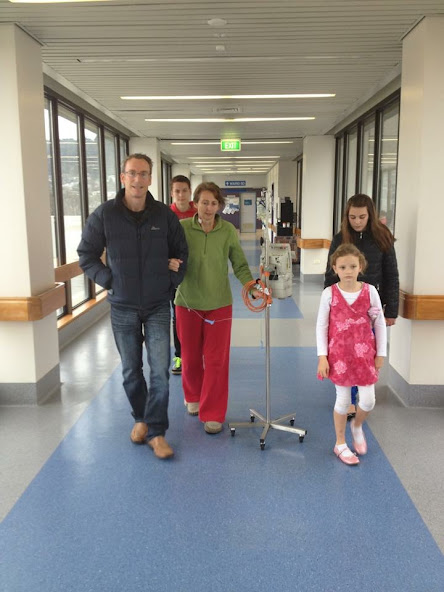
I spent the following week in Intensive Care. Collapsed lungs and pneumonia slowed my recovery. After two days of forced bed-rest and constant oxygen I was allowed to attempt walking with a frame. It took a few more days before I could move around without support. My whole lower body swelled so much my skin hurt. I wore long pressure stockings and shuffled slowly around the ward, trying to improve circulation. All the toxins which had flooded my system caused ongoing muscle pain and weakness; even the simplest of tasks caused major fatigue.
Once I returned home, we were flooded with offers of support. My mum flew down from Sydney followed by one of my sisters to help keep our household running. Dozens of friends provided meals for our family. It felt strange to be so frail. Every little milestone was cause for celebration – sleeping on my side, walking to the mailbox, squatting to get something out of the cupboard and managing to pull myself up again. After three months, I could last a whole day without sleeping in the afternoon. It took nine months before I could manage without a lie down.
Several doctors had tried to tell me how severely ill I’d been but I found it hard to fathom. It was my surgeon who finally opened my eyes at a follow-up appointment a month after the illness. For a fleeting moment he stopped his medical reflections, dropped his professional tone and told me, “I went home that night and said to my wife, ‘We had a mother of four in today and she nearly died.’” My eyes brimmed with tears. I knew I could have died but didn’t realise I’d come so very close.
Today I celebrate five years of ‘bonus life’. There are so many ‘ifs’ in my experience which could have led to a very different result:
If we hadn’t opted to go to hospital. . .
If I hadn’t known the admissions nurse . . .
If emergency had been very busy and there were less people available to help. . .
If the staff had taken longer to form a diagnosis (many people have died from such a delay) . . .
If people hadn’t bothered to pray when they heard I was sick . . .
Yet the God Who reigns over the ‘ifs’ put everything in place to make sure my life was spared. He knew the days on earth He had planned for me and made sure they were not cut short.
The words in Psalm 31:14-15, “My times are in Your hands,” are a tangible reality to me now, a source of clarity and focus. Every day is a gift to be received with thanks and lived to the full. God had a specific purpose in mind when He created me. My greatest desire and joy is to fulfil it.
“Teach us to number our days aright, that we may gain a heart of wisdom.” Psalm 90:12
I’m so excited.
No, not about moving house, if that’s what you guessed, though we are right in the thick of that process. I’m excited about a gift I’ll receive in just a few weeks. At the end of this month I’m having a special birthday so I figured this was my opportunity to make a special request.
I asked for a camera – a good one.
This may not seem like a very big deal to you but it is to me. The thought of being able to capture fleeting moments in crisp detail thrills me. With the departure from our home of ten years almost upon us I’m aware of how much we’ll rely on pictures to remind us of all the special experiences we shared here.
But there’s another aspect to photography I’m just starting to recognise – it’s in the process of taking a picture that we more fully appreciate the moment we’re in.
Sometimes our lives can be nothing more than a frenzied series of activities, all blurred together as we hurry through our days, distracted and oblivious to the detail. But when we stop to take a picture – when we study light and shadow, colour and expression – we notice new dimensions in the world around us. . . and we savour.
On Mother’s Day my husband had to go out for the afternoon on an urgent errand. Our oldest son was needed at work. Our oldest daughter wasn’t feeling well so she retreated to the bedroom. Suddenly, with little warning, our family of six had shrunk to a meagre three, counting me. Mother’s Day was starting to feel a little mellow.
With a deep breath, I invited the two remaining children to join me in playing Finska, an outdoor tossing game. As an afterthought I snatched my phone off the bench on my way out of the kitchen, thinking maybe I could use it to take some pictures. I stepped outside and my mood instantly lifted. Rather than feeling deprived, I noticed the rich, gold tones in the afternoon sky. I gazed in wonder at the brilliant green of the grass beneath my feet. We were surrounded by beauty – and I’d almost missed it.
Our laughter and cheering seemed to echo in my heart as we played that afternoon. Each time I stepped back to take a picture I recognised afresh how blessed I was. Everything may not have been as I’d wished it that day, but I had much to be thankful for. By the end of our games – and a scenic walk with my girls – my heart was full to bursting.
Often it’s the little things that bring us the most pleasure – if we take time to notice them.
Perhaps that’s why our Father tells us to slow down. Wait, He says. Be still. Lift up your eyes.Set your mind on good things.Give thanks. So often we struggle and fight, insistent that there isn’t time.
But look what we’re missing.
My thoughts were recently drawn to one particular line of Psalm 23 and I noticed something I’d never seen before. It says, “He makes me lie down in green pastures.” Did you see that? He makes me. It’s not an optional extra to lie down, to be still. It’s a command from God. And the purpose of that lying down?









 The Resting Post